West Bengal
JAMDANI & BALUCHARI — THE SIGNATURE WEAVE
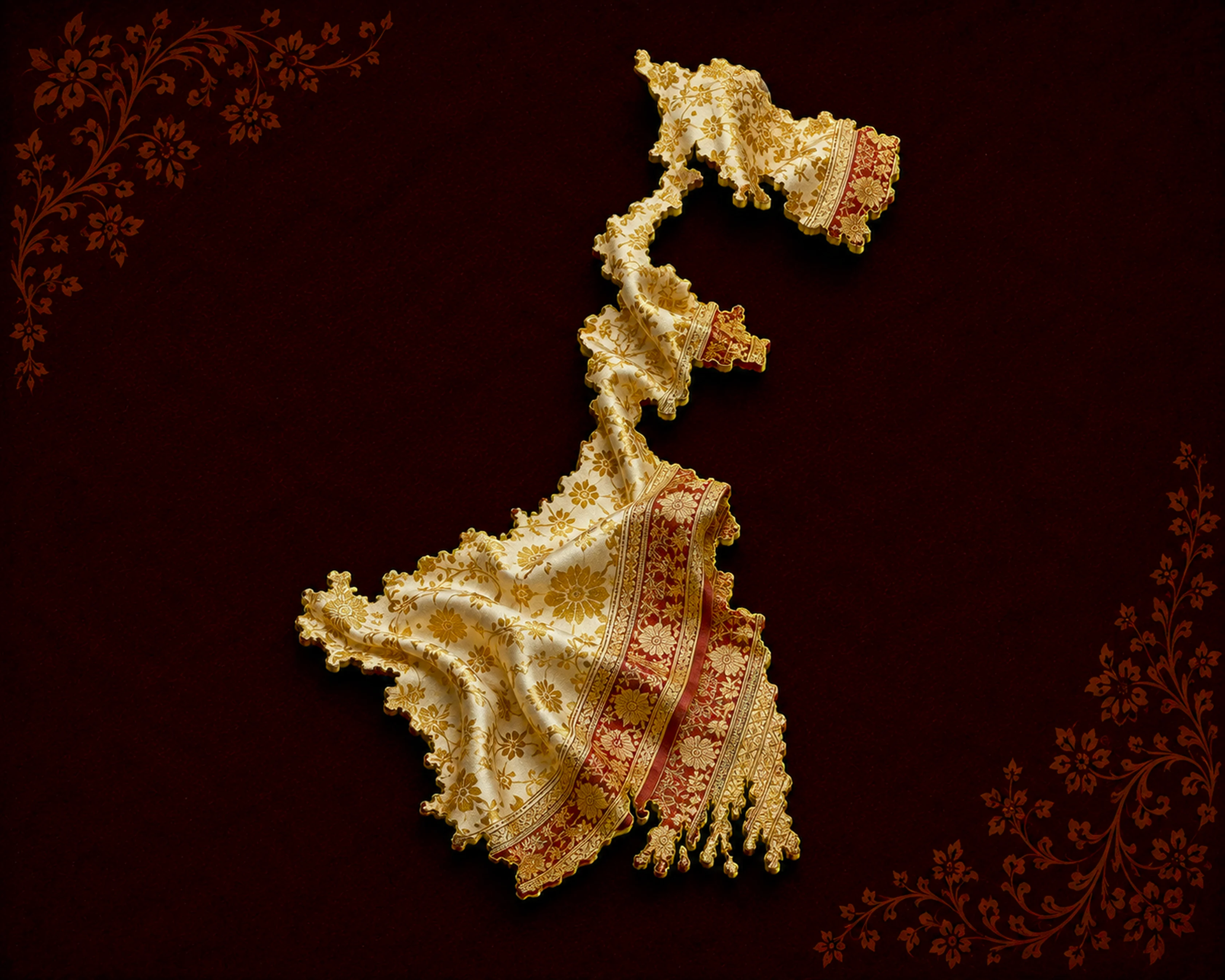
A Theatre Woven in Silk
“The Baluchari is a book you wear.”
Born in Murshidabad’s 18th-century court, the Baluchari grew from the patronage of the Nawabs, who asked weavers to translate the theatre of the Ramayana and Mughal processions into cloth. Each saree’s pallu became a stage.
After a near-death in the 20th century, master artisan Subho Thakur revived the craft in Bishnupur—where it now weaves its ancient stories for a new generation.



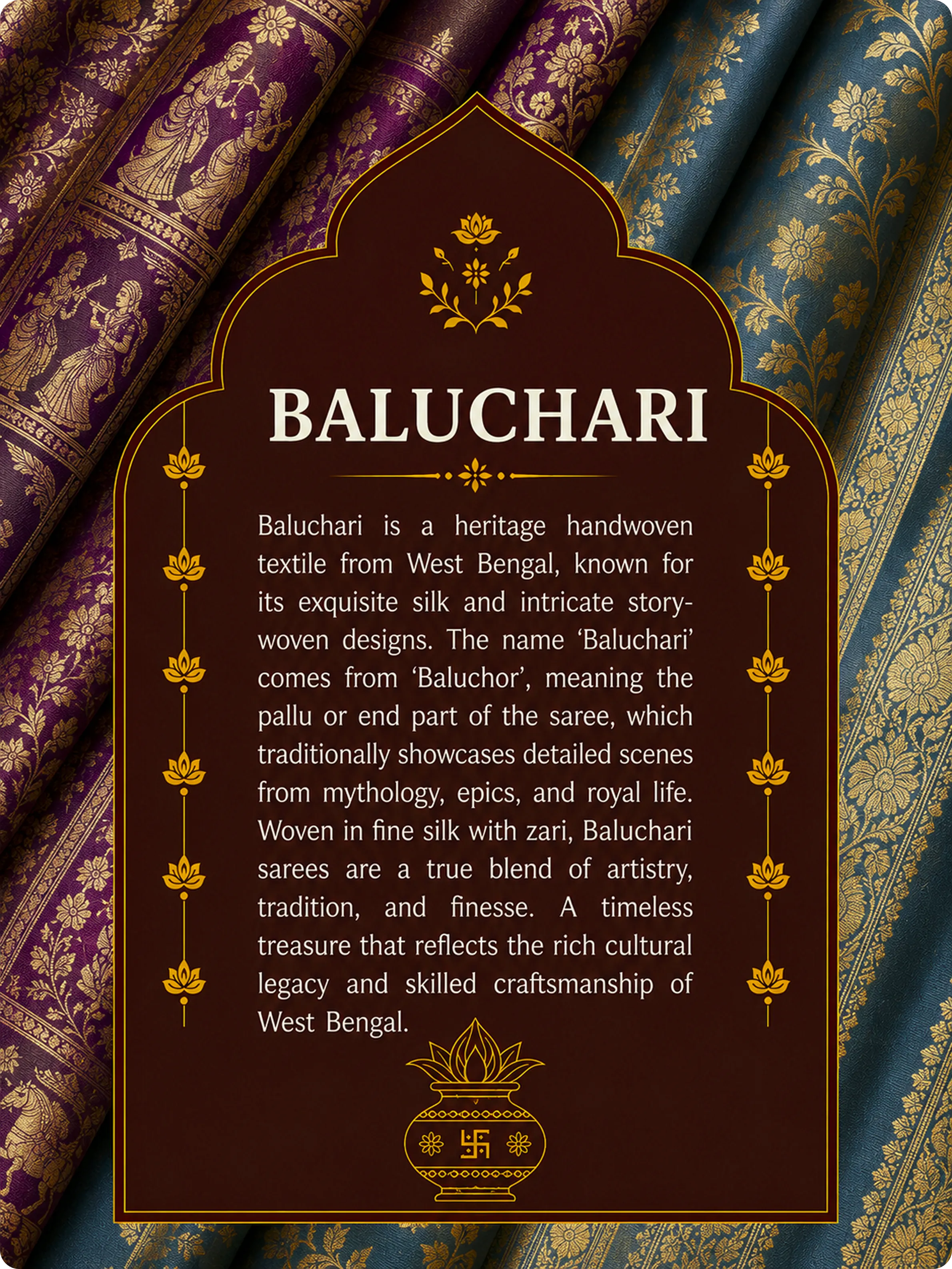
A Timeline of the Weave

Court Theatre
Murshidabad weavers create the first narrative silk under Nawabi patronage.
Decline
Machine cloth displaces the hand-woven drama of Baluchari.
Bishnupur Revival
Subho Thakur revives the craft with the women of Bishnupur.
GI & Gallery
Baluchari is GI-tagged and collected as wearable art.
How the Weave Evolved
Born in Murshidabad’s 18th-century court, the Baluchari grew from the patronage of the Nawabs, who asked weavers to translate the theatre of the Ramayana and Mughal processions into cloth. Each saree’s pallu became a stage.
After a near-death in the 20th century, master artisan Subho Thakur revived the craft in Bishnupur—where it now weaves its ancient stories for a new generation.
Interesting Facts
The Baluchari is arguably India’s only truly narrative textile.
It was revived as a women-led craft in Bishnupur.
Original Murshidabad Balucharis are museum pieces today.
Each saree’s pallu is designed as a single continuous scene.
In the Loom's Light