A Garden Stitched in Gold
“Phulkari is flower-work—I stitch my grandmother’s garden.”
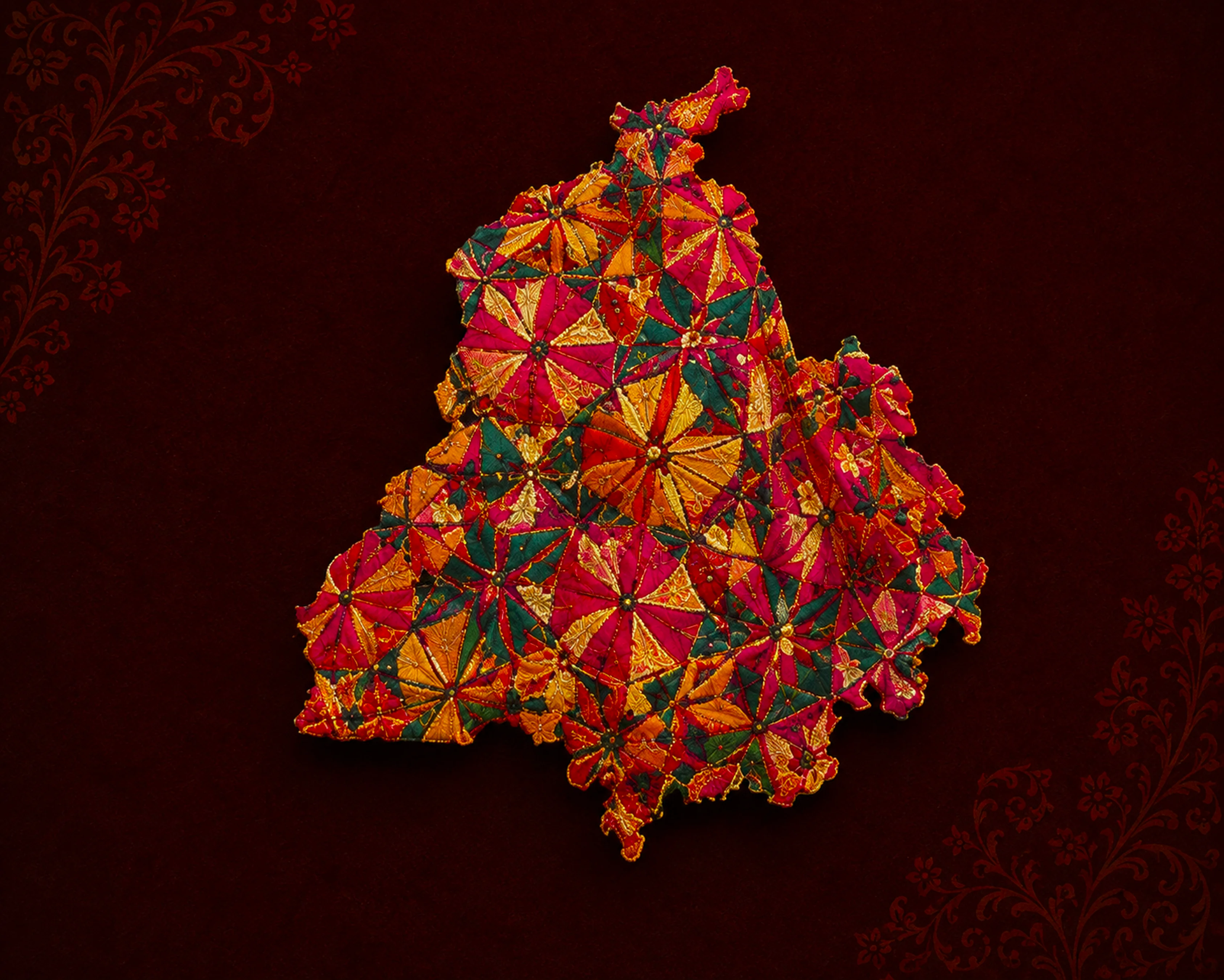
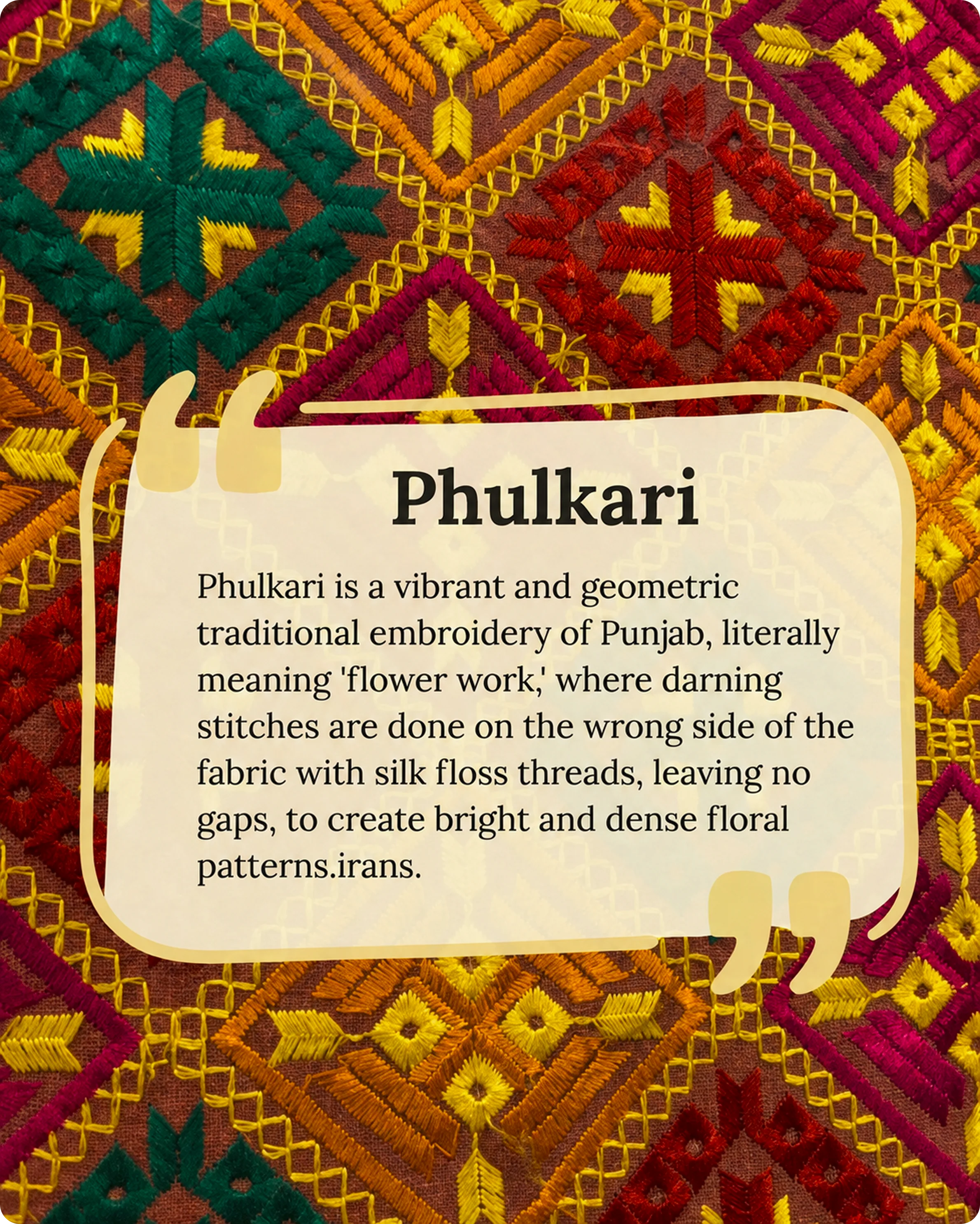
Phulkari—“flower work”—grew in the villages of Punjab, where women embroidered coarse cotton with silk floss in the darning stitch, covering fields of colour without a single sketch. The bagh, a full-cloth “garden,” was the bride’s greatest treasure.
Traditionally a domestic art, phulkari was never sold. It was stitched into trousseaus, gifted between families, and worn at every festival of the Punjab calendar.


A Timeline of the Weave
Village Roots
The darning stitch is worked across Punjab’s courtyards.
The Bagh
Full-covered baghs become the bride’s ceremonial cloth.
Diaspora
Phulkari travels with the Punjabi diaspora across the world.
Revival in Craft
GI status and women-led cooperatives keep the flower-work blooming.
How the Weave Evolved
Phulkari—“flower work”—grew in the villages of Punjab, where women embroidered coarse cotton with silk floss in the darning stitch, covering fields of colour without a single sketch. The bagh, a full-cloth “garden,” was the bride’s greatest treasure.
Traditionally a domestic art, phulkari was never sold. It was stitched into trousseaus, gifted between families, and worn at every festival of the Punjab calendar.
Interesting Facts
Phulkari is never sketched in advance.
A full bagh can take a year of evening stitching.
The craft was traditionally practised only by women.
Its silk floss came from Kashmir; its ground from Punjab’s own cotton.
In the Loom's Light