Three Yards of Devotion
“A Kanjivaram is the sound of temple bells in silk.”
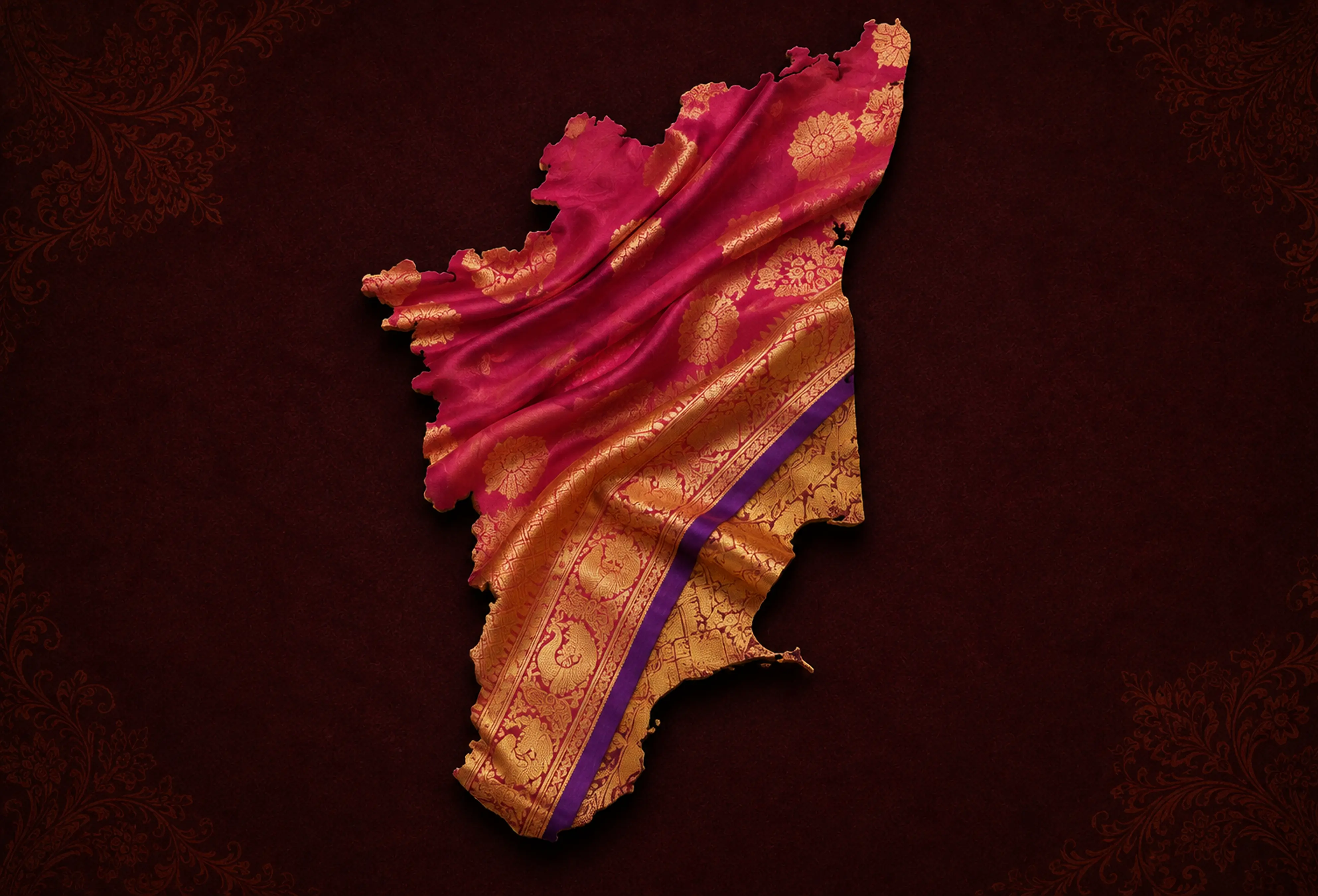
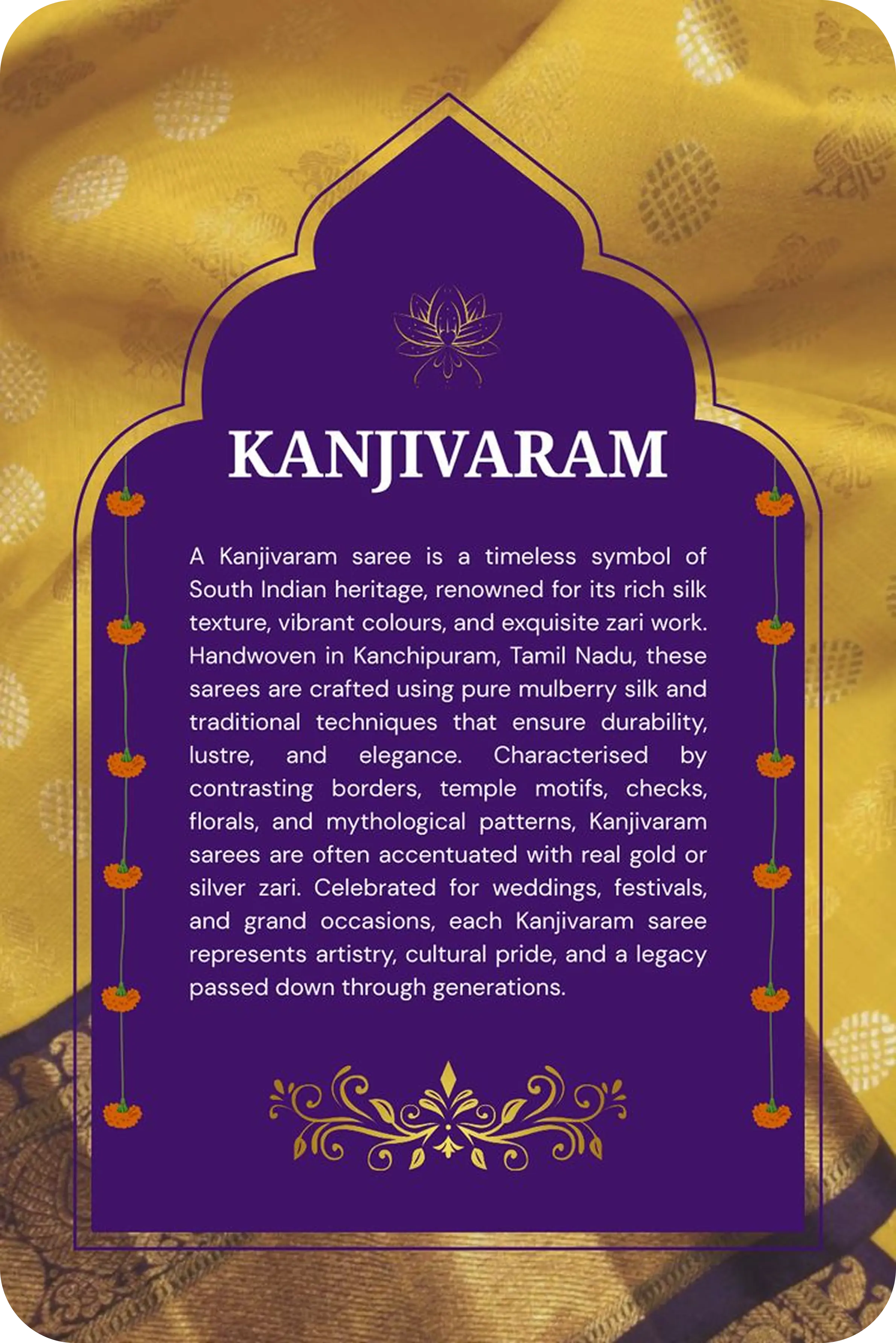
In the temple town of Kanchipuram, weavers have produced silk for royal and sacred use since the Vijayanagara era. Legend says the craft descended from Sage Markanda, the divine weaver of the gods themselves.
The Kanjivaram reached its glory in the nineteenth century, when its thick, lustrous weave and temple-inspired borders became the defining bridal silk of the South a tradition every Tamil bride still honours today.
A Timeline of the Weave
Royal Weaving
Kanchipuram looms gain royal patronage; silk is woven for temple processions.
Bridal Silk
The three-yard saree takes its modern form—temple, peacock and rudraksham borders.
Korvai Perfected
Weavers perfect the korvai interlock between body and border.
The Wedding Silk
A Kanjivaram is still the non-negotiable first saree of a South Indian bride.
How the Weave Evolved
In the temple town of Kanchipuram, weavers have produced silk for royal and sacred use since the Vijayanagara era. Legend says the craft descended from Sage Markanda, the divine weaver of the gods themselves.
The Kanjivaram reached its glory in the nineteenth century, when its thick, lustrous a tradition every Tamil bride still honours today. weave and temple-inspired borders became the defining bridal silk of the South
Interesting Facts
A genuine Kanjivaram is heavy—many weigh close to a kilogram.
The zari is drawn and gilded by hand in Kumbakonam, a few streets from the looms.
Temple borders are woven so the motif faces the wearer’s shoulder.
Some bridal Kanjivarams are woven in a single uncut piece, pallu to pallu.
In the Loom's Light