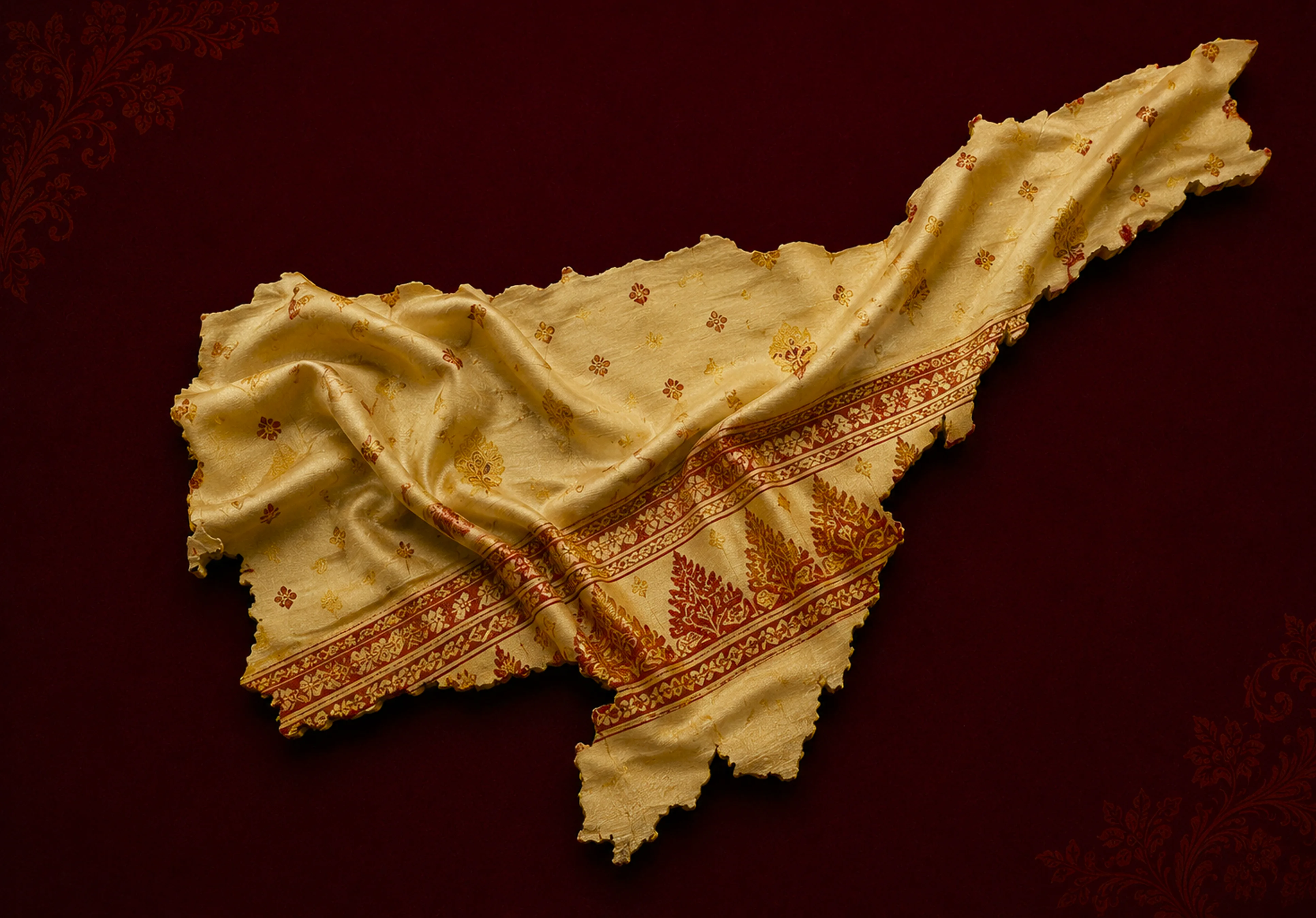
The Golden Silk That Never Fades
“Muga is not dyed. It is born golden, and it stays golden.”
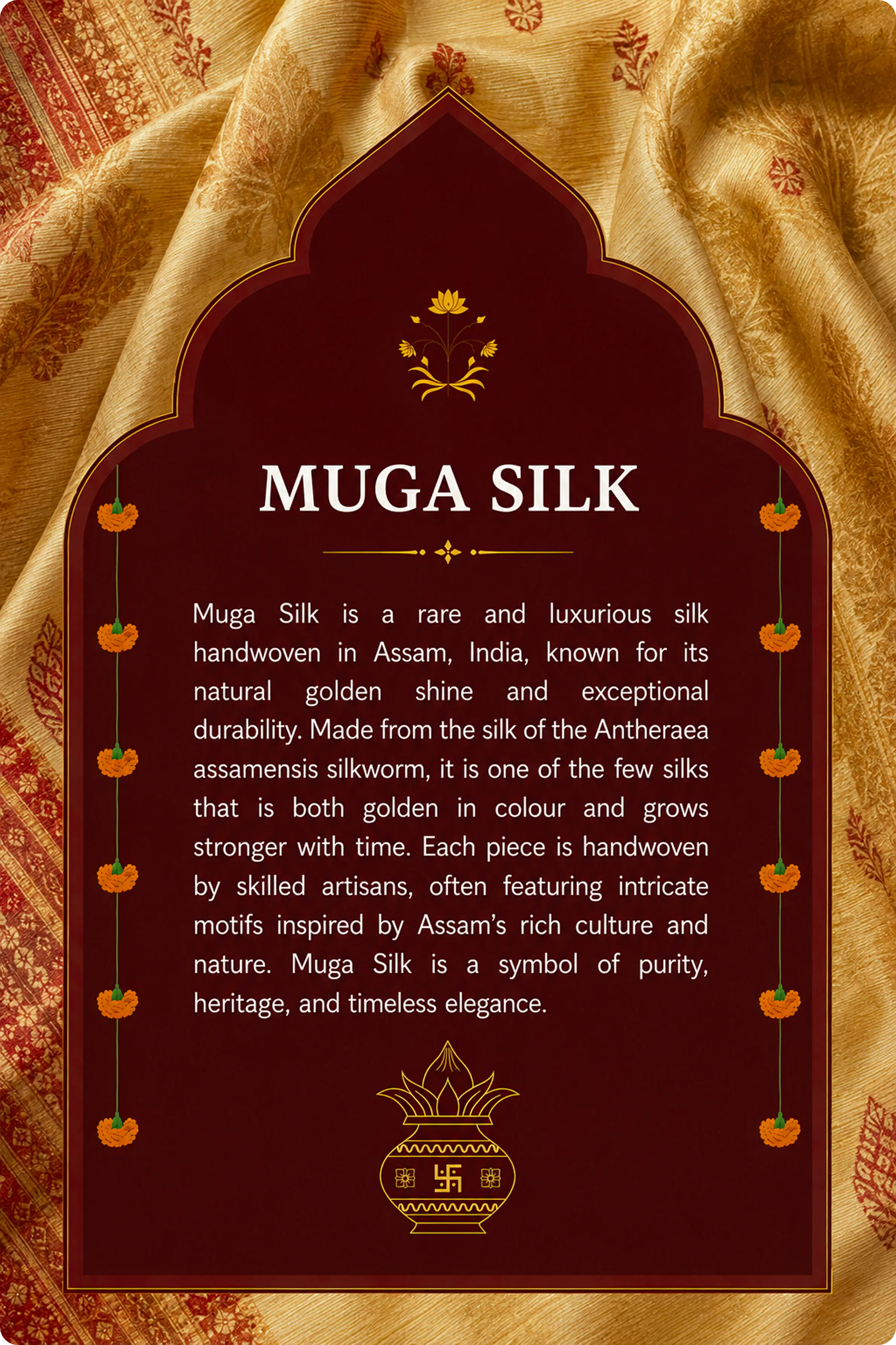
Woven in Assam since at least the 9th century, muga comes from the cocoons of the Antheraea assamensis moth, which feeds on Som and Soalu trees and is found nowhere else on earth. Its golden fibre was once reserved for the Ahom royalty.
The silk’s miracle is permanence: muga does not fade or weaken with washing—a golden thread that outlives its weavers.


A Timeline of the Weave
Royal Silk
The Ahom kings monopolise muga for their courts.
The Golden Age
Muga weaving reaches its height in the Ahom era.
Community Craft
The craft spreads across Assamese households and villages.
GI Golden Silk
GI-tagged muga dresses ceremonial and couture alike.
How the Weave Evolved
Woven in Assam since at least the 9th century, muga comes from the cocoons of the Antheraea assamensis moth, which feeds on Som and Soalu trees and is found nowhere else on earth. Its golden fibre was once reserved for the Ahom royalty.
The silk’s miracle is permanence: muga does not fade or weaken with washing—a golden thread that outlives its weavers.
Interesting Facts
Muga is found nowhere outside Assam.
It is one of the costliest natural silks in the world.
The silk genuinely improves with age.
The Ahom kings once decreed muga could be worn only by royalty.
In the Loom's Light