Moonlight, Woven
“Chanderi is not transparent; it is translucent, like a thought.”
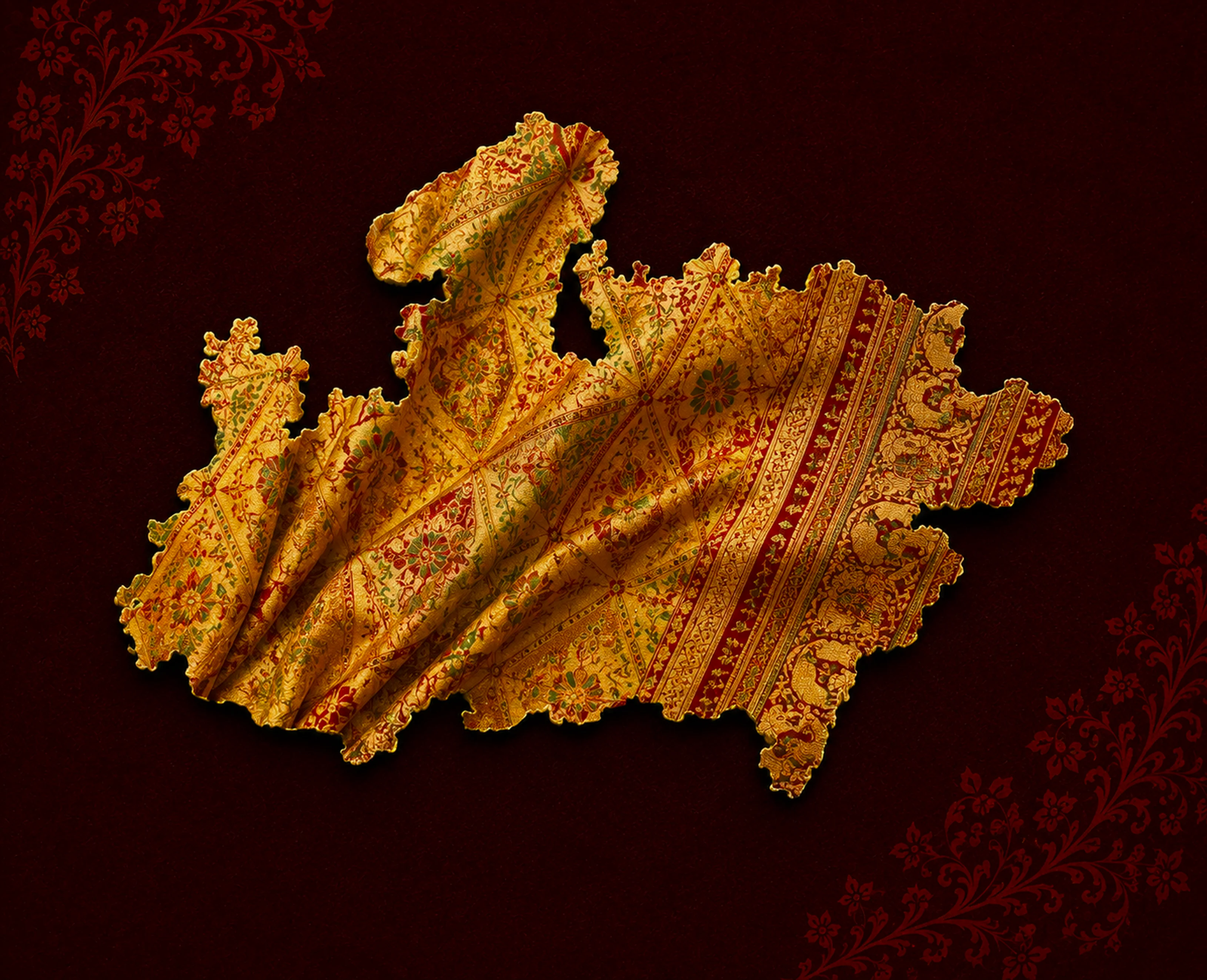
Woven in the town of Chanderi since the 11th century, this silk-cotton cloth was the beloved of Malwa queens and the Bundela court. Its secret is transparency: a ground so sheer it floats, patterned with gold butis (dots) that seem to hover above the skin.
Marco Polo and Ibn Battuta both wrote of Chanderi’s fineness. Today its looms weave for brides who want silk without weight—and light without compromise.


A Timeline of the Weave
Royal Favour
Chanderi silk is noted by travellers to the courts of Malwa.
Bundela Patronage
The Bundela kings commission the gold-dotted chanderi for court dress.
The Sheer Revival
Weavers reintroduce the famous transparent finish after a colonial slump.
Contemporary Classic
Chanderi now dresses both weddings and boardrooms.
How the Weave Evolved
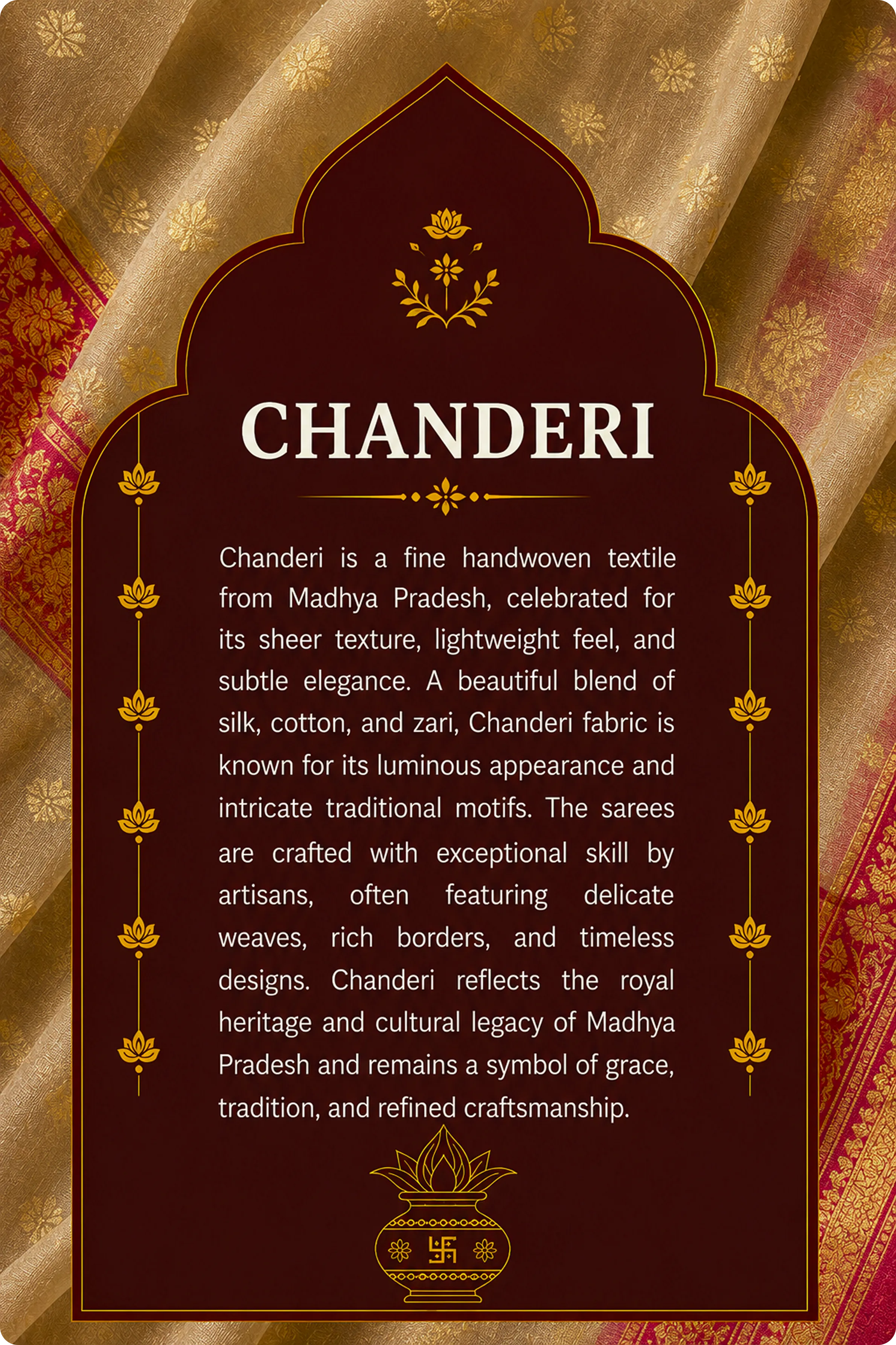
Woven in the town of Chanderi since the 11th century, this silk-cotton cloth was the beloved of Malwa queens and the Bundela court. Its secret is transparency: a ground so sheer it floats, patterned with gold butis (dots) that seem to hover above the skin.
Marco Polo and Ibn Battuta both wrote of Chanderi’s fineness. Today its looms weave for brides who want silk without weight—and light without compromise.
Interesting Facts
Chanderi is named after the town, which itself means “moon” in the local idiom.
The cloth weighs so little that a full saree can be folded into a matchbox.
It is the only traditional Indian silk woven from a silk-cotton blend.
Bridal chanderi is often woven with a silk zari that reads gold in candlelight.
In the Loom's Light