The Warmth of the Changthangi Goat
“It is not wool. It is light, spun.”
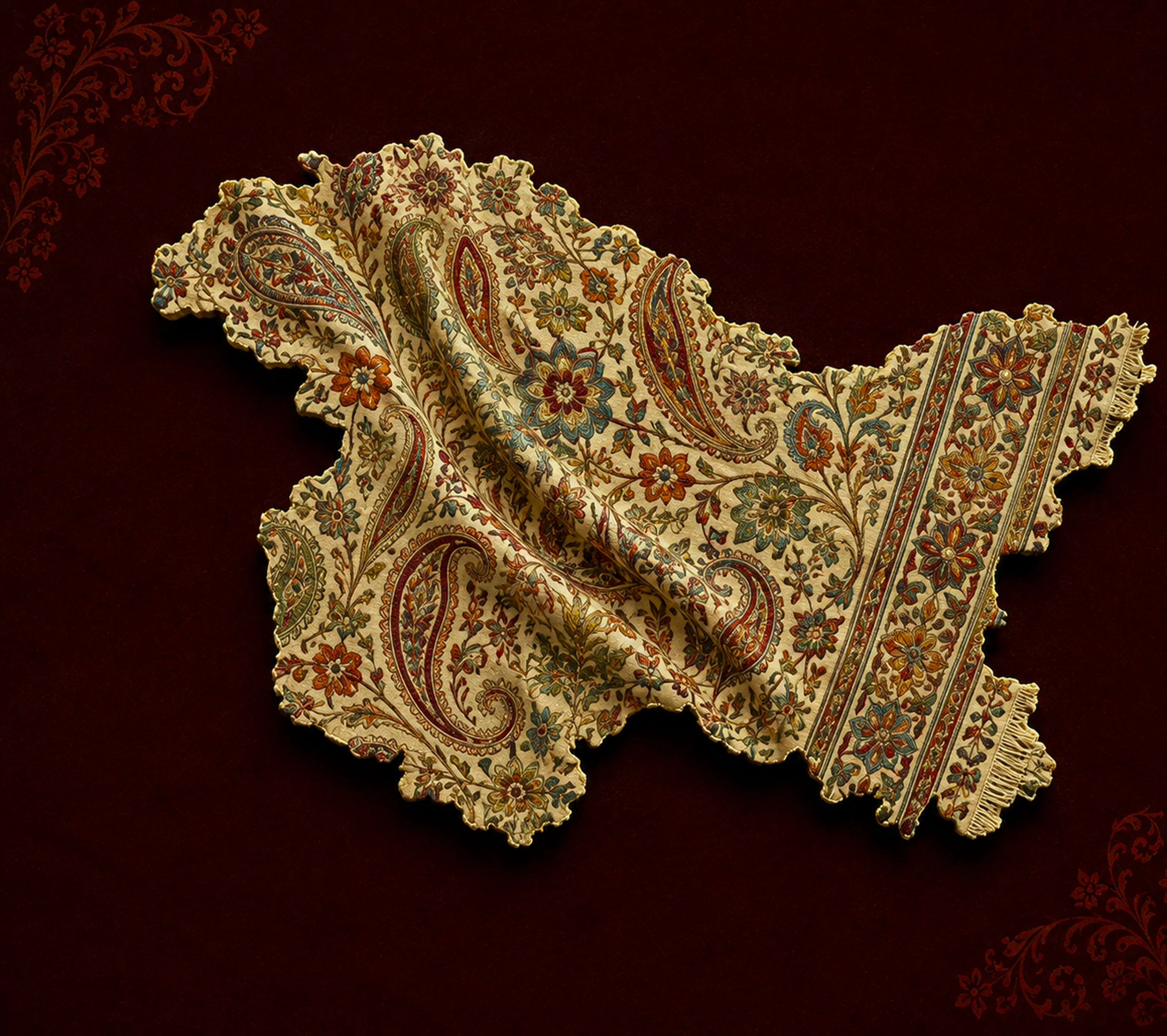
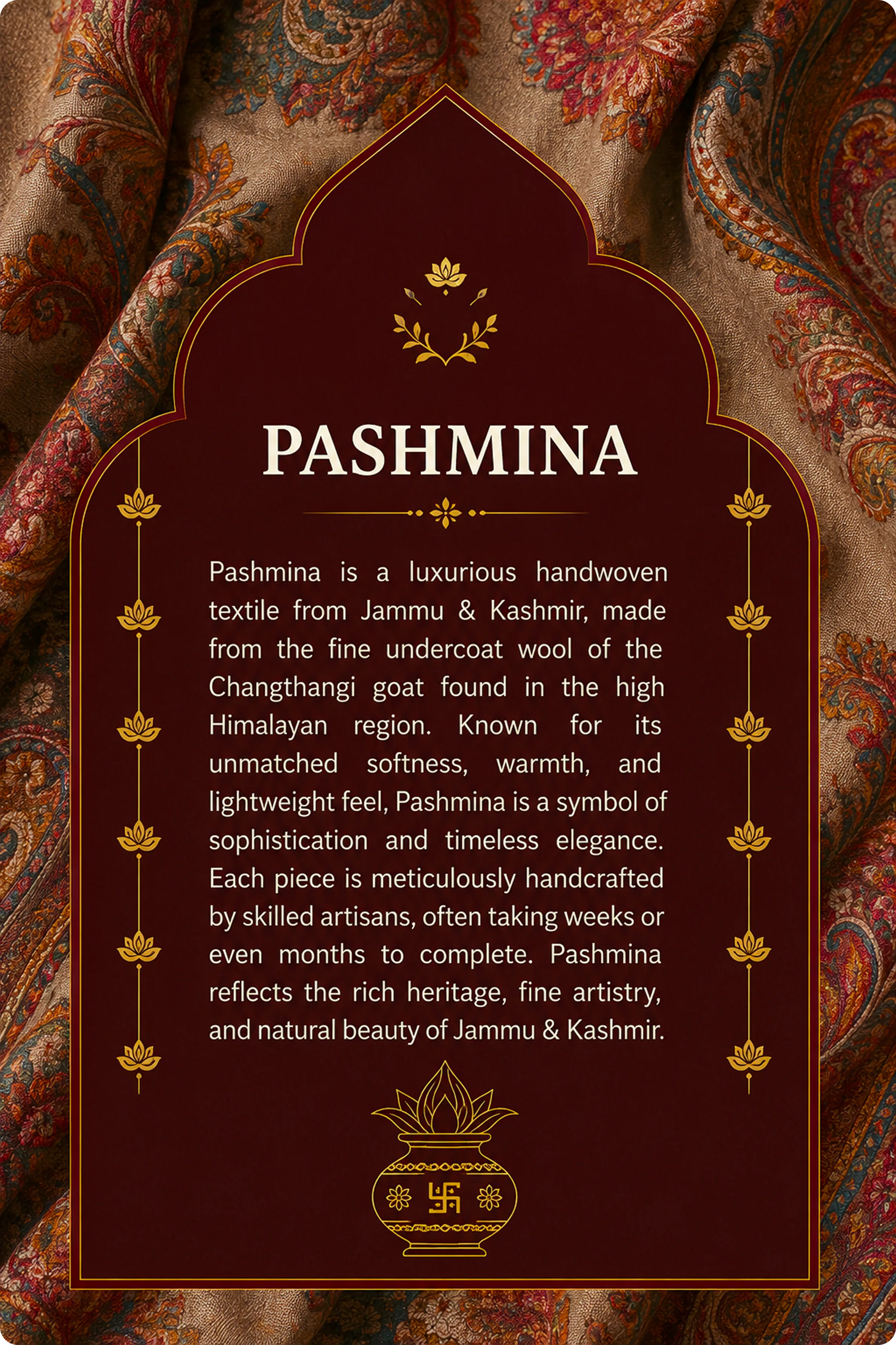
In the high cold of Ladakh, the Changthangi goat grows an undercoat so fine it passes through a ring. Kashmir’s weavers have spun that fleece into pashmina for over six centuries, since the shawl trade made Srinagar a stop on the Silk Road.
The kani shawl—woven on a loom with sticks as its palette—became the crown of the craft, and pashmina the softest word in the wardrobe of the world.
A Timeline of the Weave
The Shawl Trade
Srinagar becomes the shawl capital of the Silk Road.
Royal Demand
Persian and European courts compete for the rarest kani shawls.
Napoleon & Paisley
European demand reshapes patterns—and names the paisley after the shawl town of Paisley.
Kani Revival
Zardozi commissions kani shawls in the traditional stick-looms of Srinagar.
How the Weave Evolved
In the high cold of Ladakh, the Changthangi goat grows an undercoat so fine it passes through a ring. Kashmir’s weavers have spun that fleece into pashmina for over six centuries, since the shawl trade made Srinagar a stop on the Silk Road.
The kani shawl—woven on a loom with sticks as its palette—became the crown of the craft, and pashmina the softest word in the wardrobe of the world.
Interesting Facts
The Changthangi goat yields only 80–170 grams of underfleece per year.
True pashmina is never machine-spun; the hand spindle is non-negotiable.
A kani shawl can take a year to complete.
Two genuine pashmina shawls pass through a wedding ring.
In the Loom's Light