Rajasthan
BANDHANI & KOTA DORIA — THE SIGNATURE WEAVE
The Desert’s Garden of Dots
“Every knot in a Bandhani is a wish tied against time.”
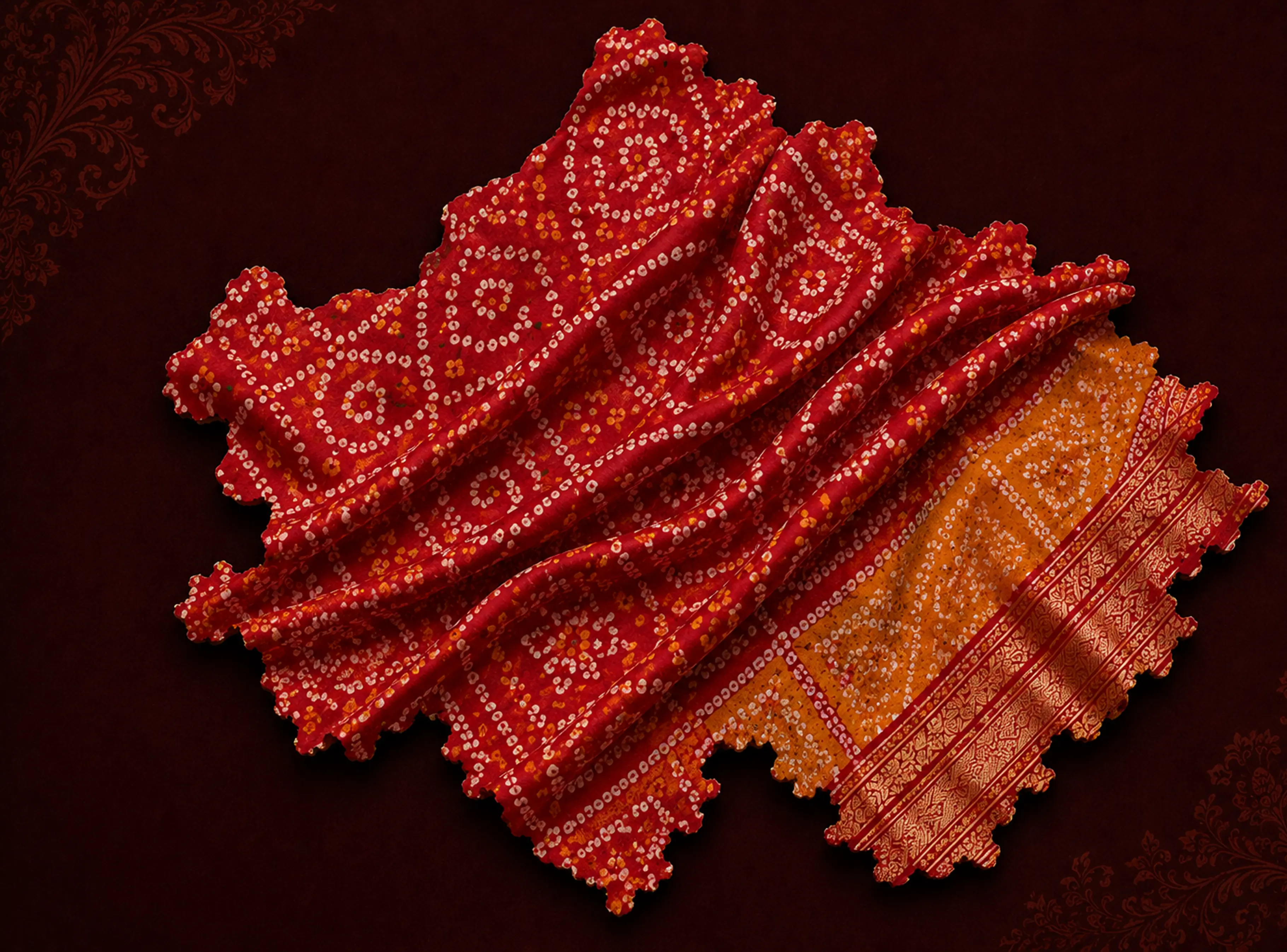
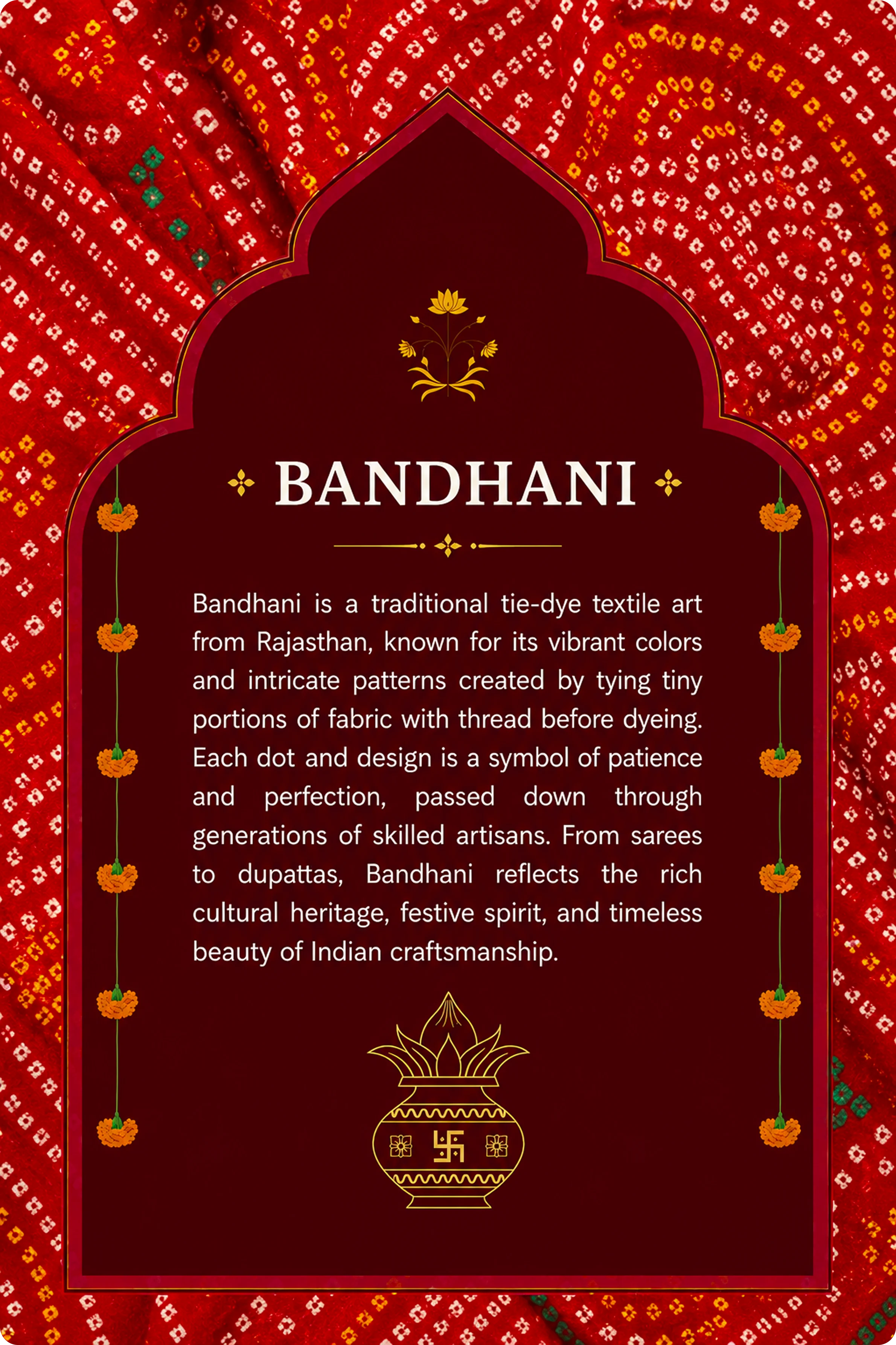
The oldest mention of bandhani appears in the Bana Bhatta’s 7th-century Harshacharita, and the craft likely reaches back to the Indus Valley. It was the wedding dress of Rajasthan: a leheriya of waves, a chandrokhani of moons, tied and dyed by women’s hands.
From Jaipur’s pink courtyards to the Jamnagar looms, bandhani has dressed dancers, queens and today’s festival-goers for a thousand years.
A Timeline of the Weave
The First Knot
Bana Bhatta describes fabric patterned with the “skill of the knot”.
Royal Motif
Bandhani becomes the favoured court textile of Rajasthan and Gujarat.
The Wedding Cloth
A bridal odhni of bandhani is still the first gift of a Rajasthani groom.
Modern Wave
Zardozi reinterprets bandhani in silk for festive couture.
How the Weave Evolved
The oldest mention of bandhani appears in the Bana Bhatta’s 7th-century Harshacharita, and the craft likely reaches back to the Indus Valley. It was the wedding dress of Rajasthan: a leheriya of waves, a chandrokhani of moons, tied and dyed by women’s hands.
From Jaipur’s pink courtyards to the Jamnagar looms, bandhani has dressed dancers, queens and today’s festival-goers for a thousand years.
Interesting Facts
Bandhani predates the common era; its technique is at least 2,000 years old.
The finest bandhani has knots too small to see with the naked eye.
In Rajasthan, a bride wears bandhani until the first year of marriage.
The term “bandhani” comes from the Sanskrit bandh, to tie.
In the Loom's Light