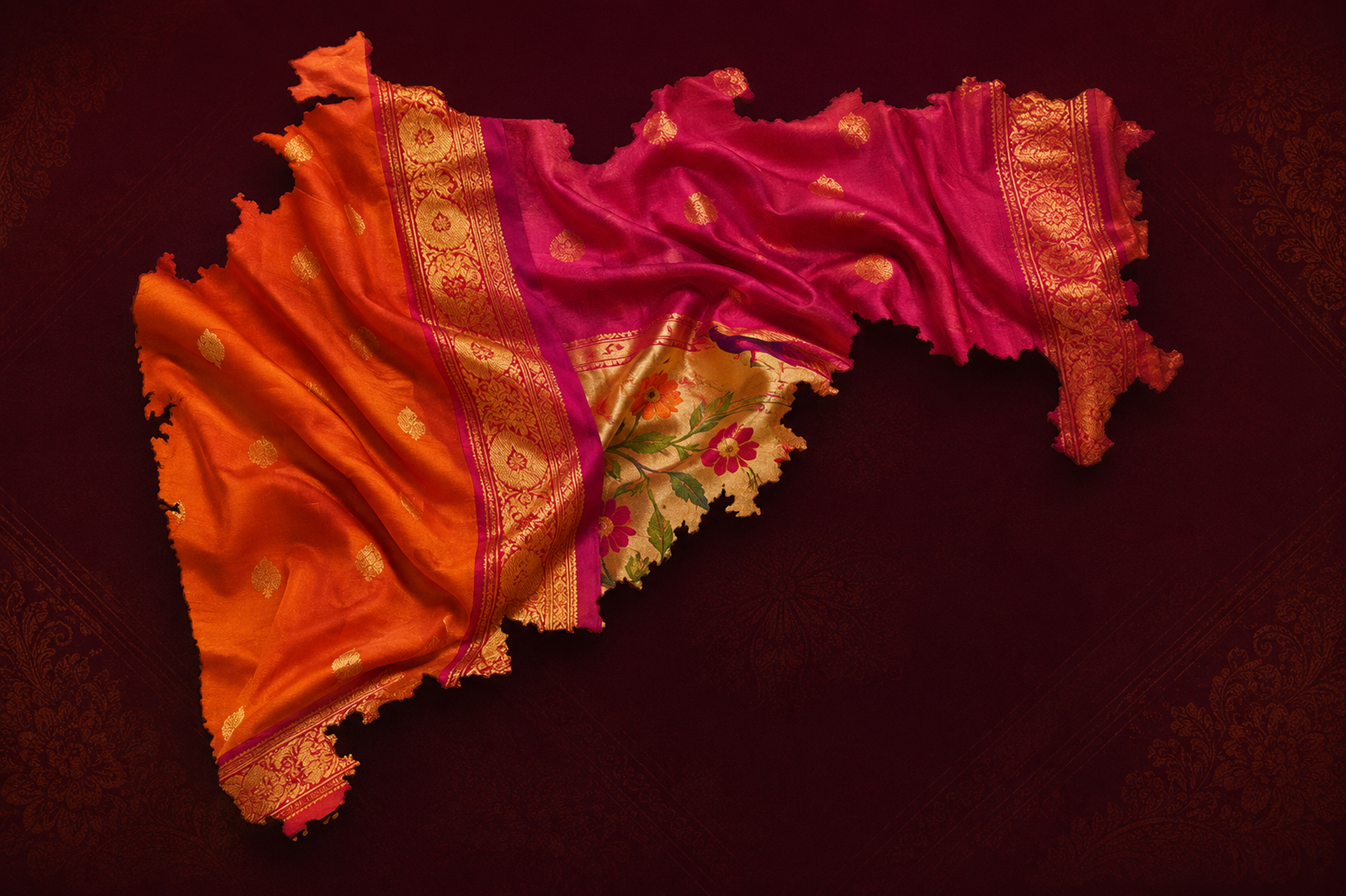
The Peacock-Eyed Silk of Yeola
“The Paithani is not worn; it is displayed, like a flame held still.”
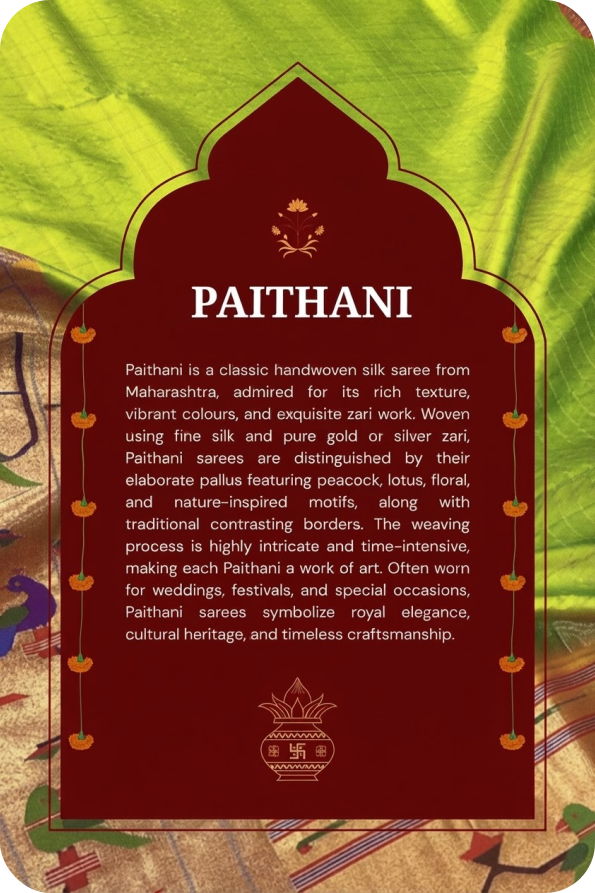
Paithani takes its name from Paithan, the ancient capital of the Satavahana dynasty, where weavers first perfected this lustrous silk in the first millennium BCE. Its fame reached its zenith under the Peshwas of Pune, who draped their royal courts in its peacock-eyed pallus and gold borders.
Each Paithani was a gift of consequence—presented to brides, honoured guests and temple deities. The art survived through the Maratha era, declined under colonial imports, and was revived in the twentieth century in the weaving town of Yeola, where Zardozi sources its Paithani today.
A Timeline of the Weave
The Satavahanas
Weaving flourishes in Paithan, the dynasty's capital on the Godavari.
Maratha Patronage
The Peshwas gift Paithani sarees at court weddings, cementing its royal status.
Yeola Rising
After a slump under colonial rule, weavers cluster in Yeola and resurrect the craft.
GI Recognition
Paithani receives Geographical Indication status; Zardozi partners with Yeola looms.
A Living Heirloom
Every Zardozi Paithani is woven to order, named, and dated like a work of art.
How the Weave Evolved
Paithani takes its name from Paithan, the ancient capital of the Satavahana dynasty, where weavers first perfected this lustrous silk in the first millennium BCE. Its fame reached its zenith under the Peshwas of Pune, who draped their royal courts in its peacock-eyed pallus and gold borders.
Each Paithani was a gift of consequence—presented to brides, honoured guests and temple deities. The art survived through the Maratha era, declined under colonial imports, and was revived in the twentieth century in the weaving town of Yeola, where Zardozi sources its Paithani today.
Interesting Facts
A genuine Paithani can take 6 to 8 months to weave—and the finest examples longer.
The pallu is reversible: the pattern reads identically from both sides.
Traditional Paithanis were weighed in gold; their zari alone could be the family's savings.
The most coveted pattern, the bangadi mor, is woven with a single continuous zari thread.
In the Loom's Light