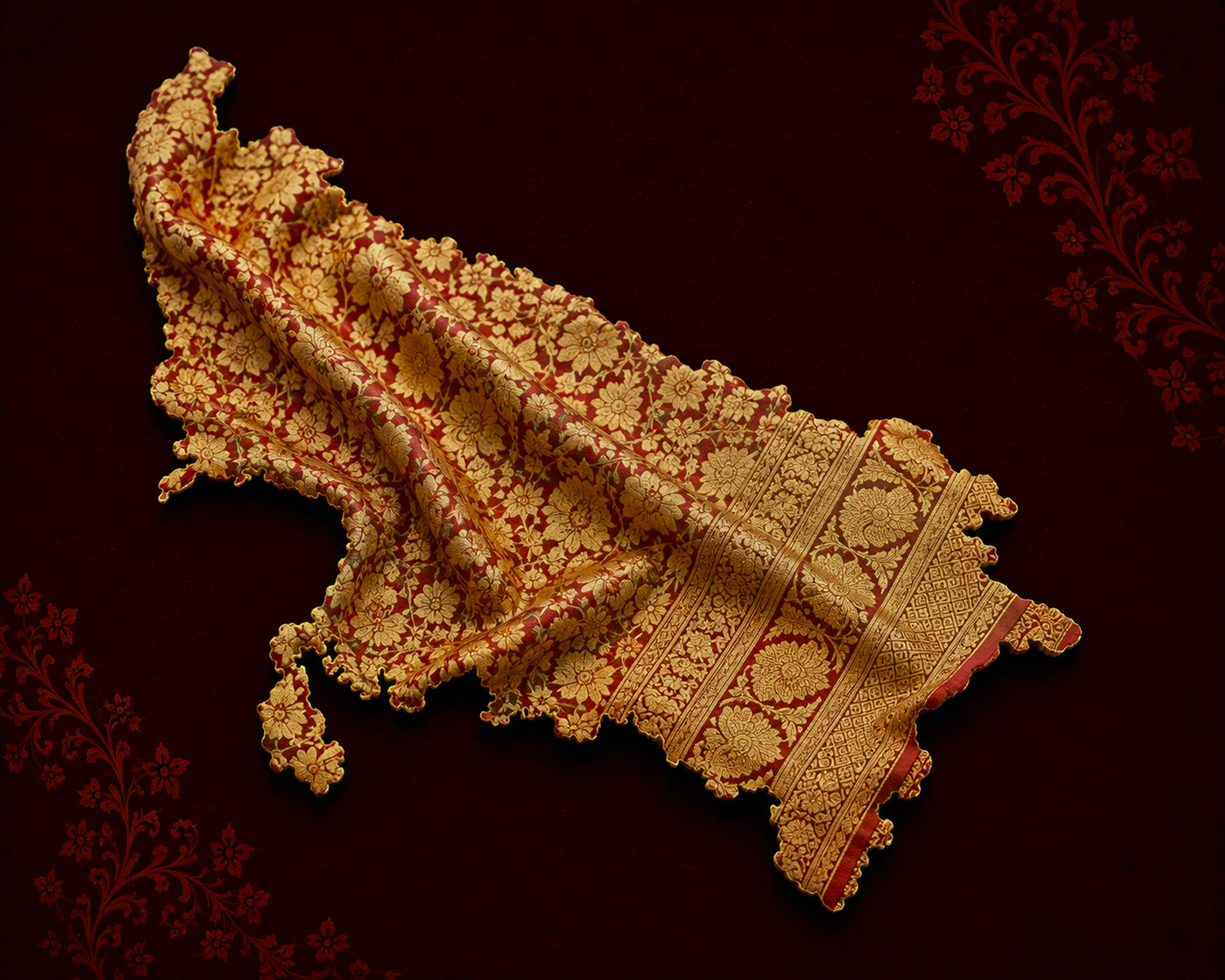
The Emperor of Silks
“In Varanasi, the loom is the third holiest thing on earth.”
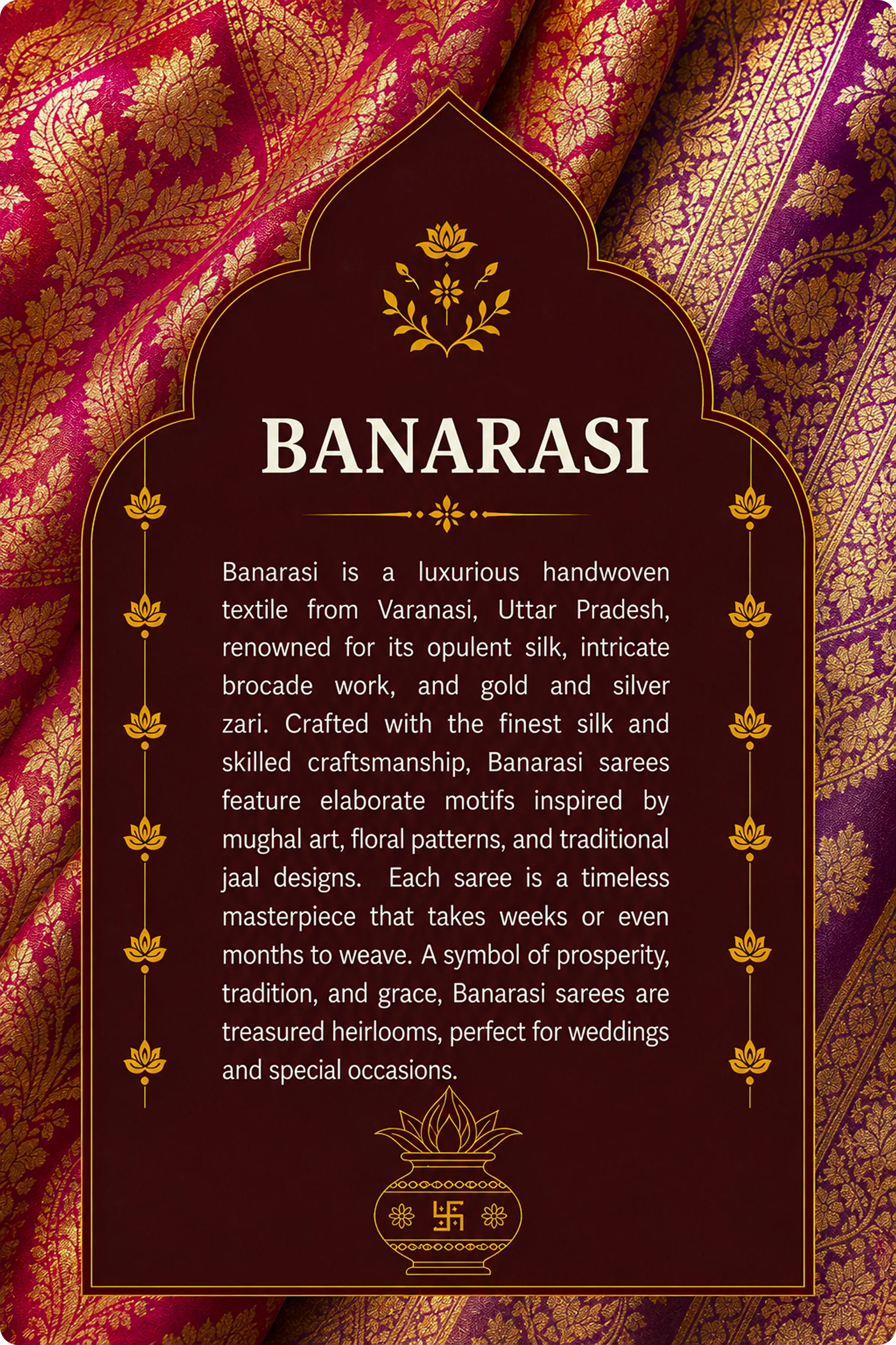
When the Mughal emperor Akbar brought master weavers to Varanasi in the 16th century, he sowed the seed of the world’s most celebrated brocade. Weaving patterns from Persian courts onto Indian silk, they created kinkhab, tanchoi and the inimitable Banarasi.
Five centuries later, the lanes of Madanpura still resound with the clatter of 200,000 looms—and a Banarasi remains the great bridal silk of the North.
A Timeline of the Weave
Mughal Birth
Akbar settles Persian weavers in Varanasi; the Banarasi brocade is born.
Kinkhab Glory
Pure-gold and silver brocades become the dress of courts and temples.
Jacquard Arrives
The punched-card loom lets a single artisan master patterns that once took a team.
Bridal Standard
From wedding trousseaus to red carpets, the Banarasi endures.
How the Weave Evolved
When the Mughal emperor Akbar brought master weavers to Varanasi in the 16th century, he sowed the seed of the world’s most celebrated brocade. Weaving patterns from Persian courts onto Indian silk, they created kinkhab, tanchoi and the inimitable Banarasi.
Five centuries later, the lanes of Madanpura still resound with the clatter of 200,000 looms—and a Banarasi remains the great bridal silk of the North.
Interesting Facts
The word zardozi—Zardozi’s own name—means “gold embroidery” in Persian.
A single ornate Banarasi can take six months and two weavers working in shifts.
Genuine Banarasi zari is 55% silver and 0.5% gold by tradition.
Varanasi’s brocade was sung about in the Rigveda—weaving is older than the city itself.
In the Loom's Light