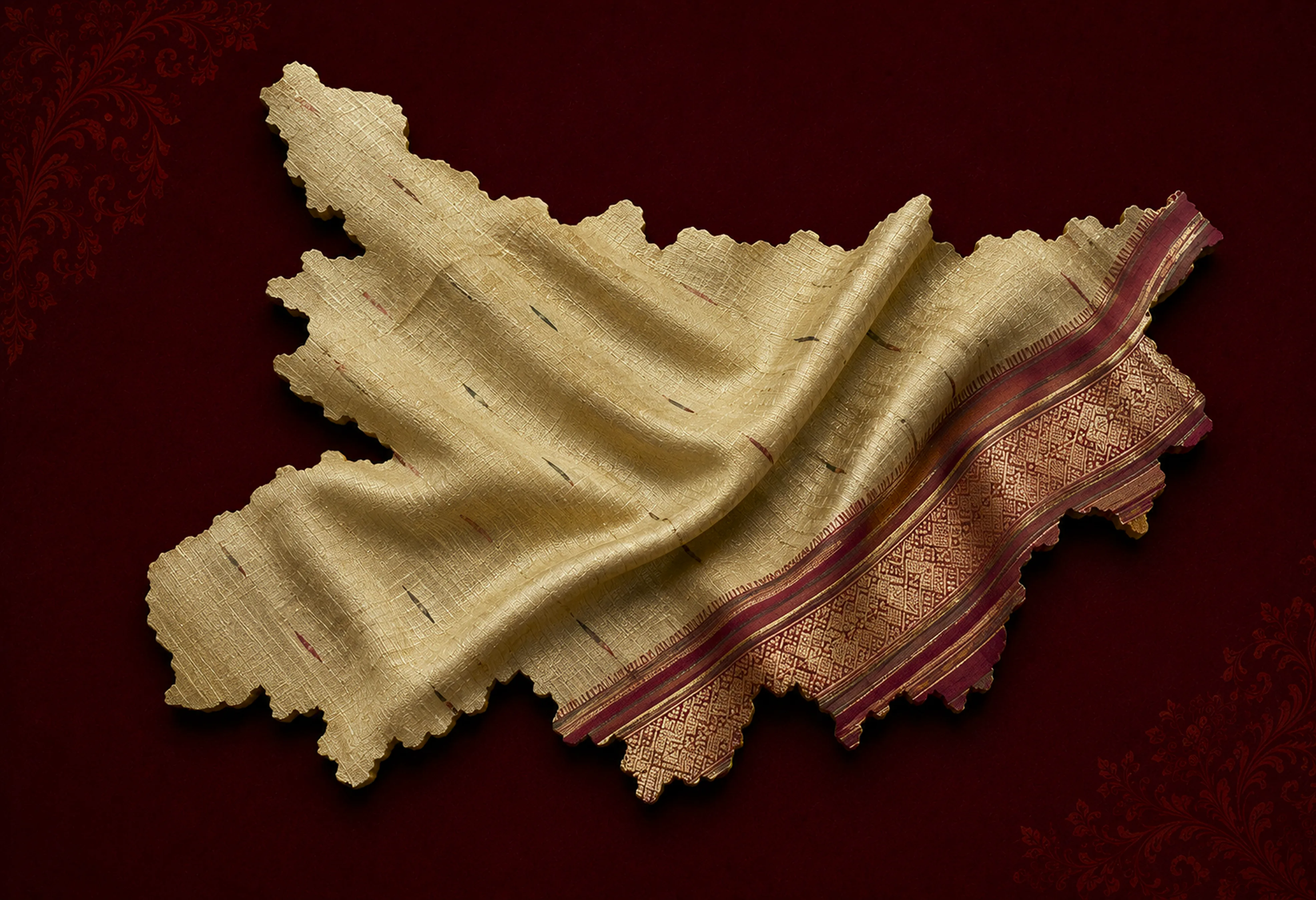
The Gold of the Forest
“Tussar is the silk that refuses to be tamed.”
Bhagalpur has spun tussar—wild silk from the cocoons of the Antheraea moth—for over four centuries, when the Anga kings patronised its golden sheen. Unlike cultivated mulberry silk, tussar comes from the forests themselves.
Its naturally honeyed colour, called “bhagalpuri gold,” needs no dye to shine, and the craft remains the livelihood of some 70,000 weavers in the region.
A Timeline of the Weave
Anga Patronage
Tussar weaving flourishes under the Anga kings.
The Golden Cloth
Bhagalpur tussar is traded to courts and fairs across India.
Handloom Heartland
The craft becomes Bihar’s signature handloom.
GI & Modern Drape
GI-tagged tussar now weaves contemporary silhouettes.
How the Weave Evolved
Bhagalpur has spun tussar—wild silk from the cocoons of the Antheraea moth—for over four centuries, when the Anga kings patronised its golden sheen. Unlike cultivated mulberry silk, tussar comes from the forests themselves.
Its naturally honeyed colour, called “bhagalpuri gold,” needs no dye to shine, and the craft remains the livelihood of some 70,000 weavers in the region.
Interesting Facts
Tussar is never cultivated—it is harvested from forests.
Its natural colour is called “bhagalpuri gold.”
Around 70,000 weavers work in Bhagalpur’s tussar cluster.
The cloth is biodegradable, including its dyes.
In the Loom's Light