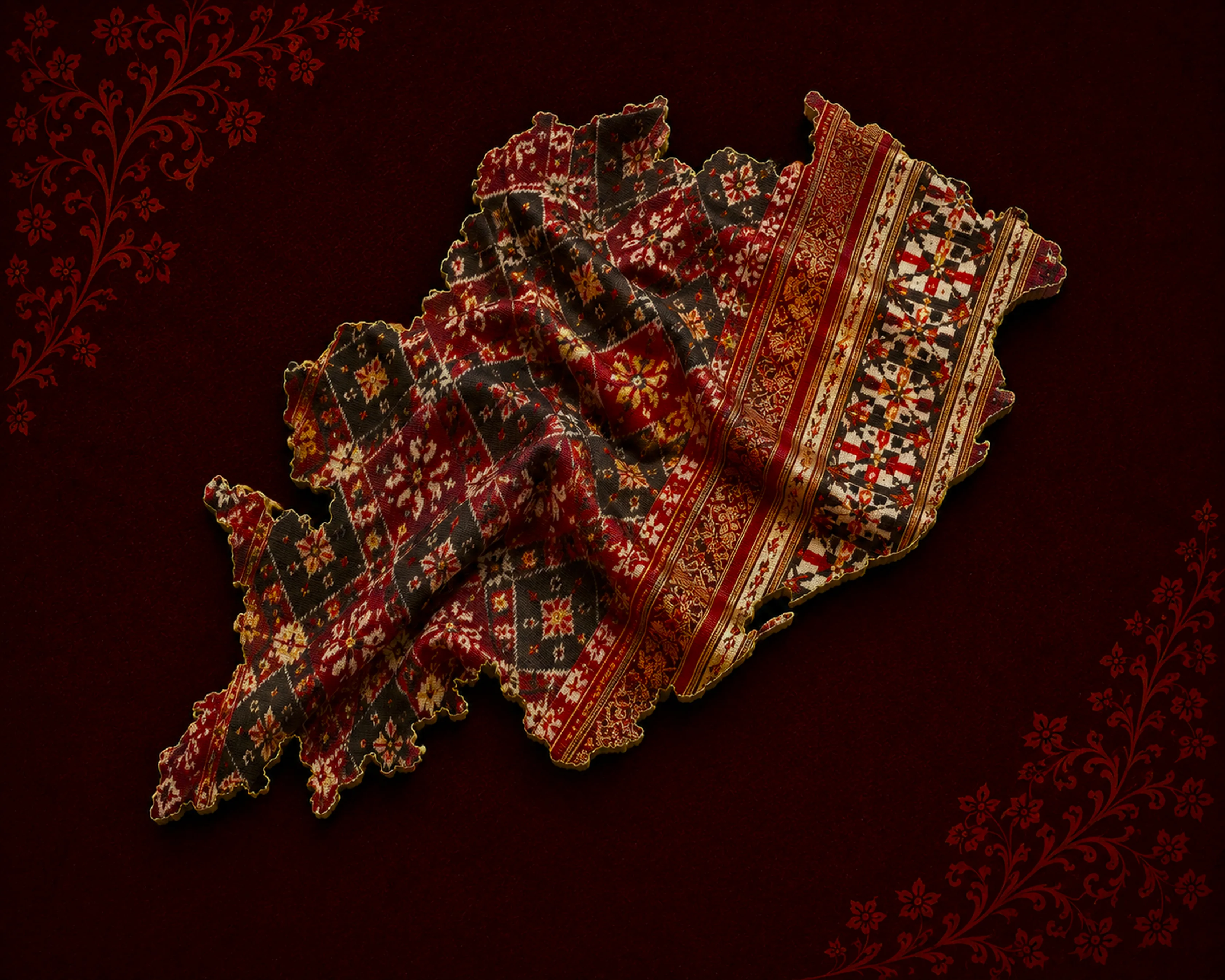
The Ikat of Sacred Symbols
“We weave the temple into the cloth, so we may carry it home.”
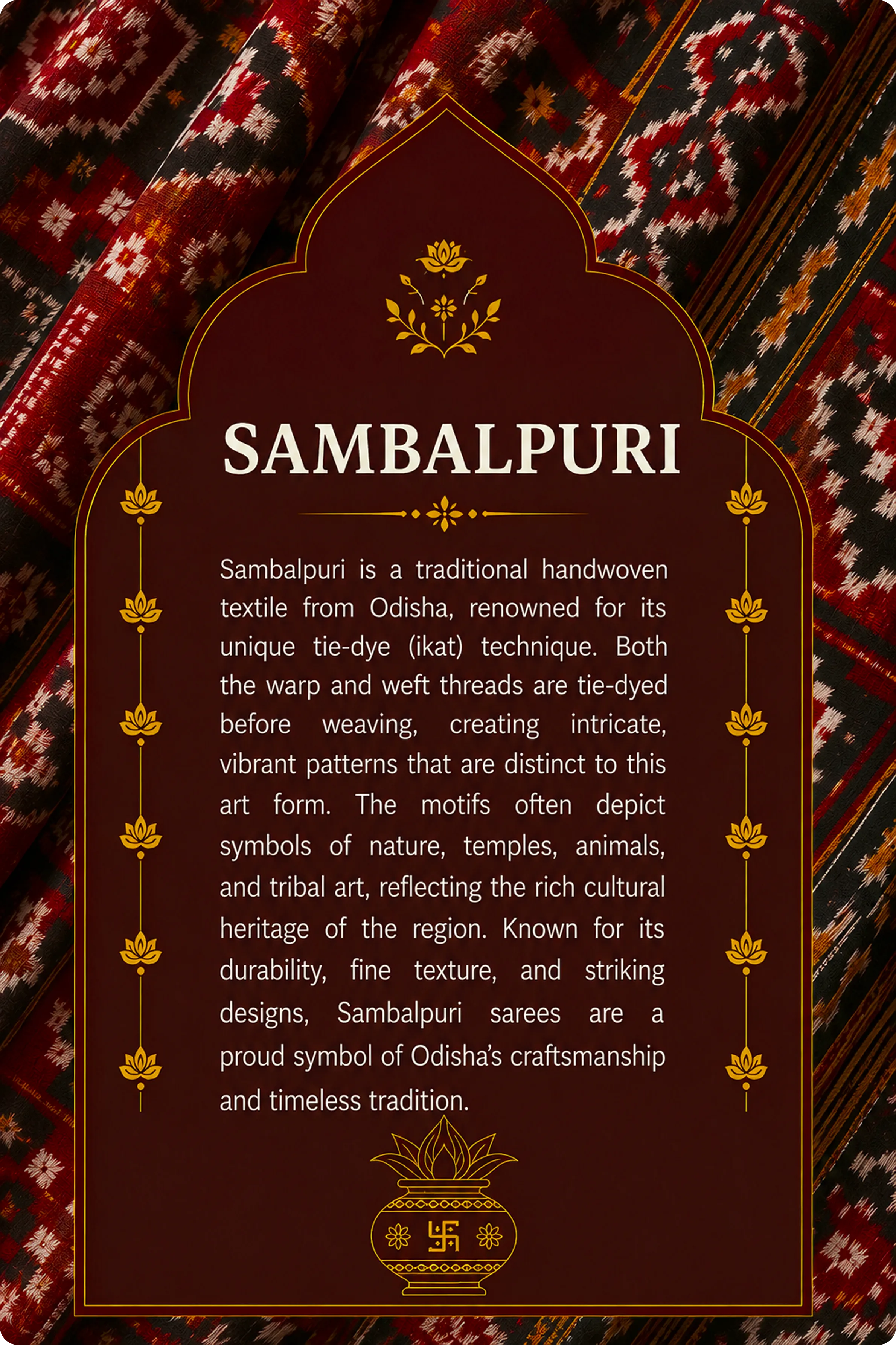
In the weaving villages of western Odisha, craftspeople have tie-dyed cotton and silk into ikat since at least the 16th century. Their patterns carry the symbols of the Jagannath temple—the wheel, the conch, the lotus—worn as portable devotion.
The Sambalpuri is distinguished by its bandha ikat: warp and weft both dyed to pattern, in earthy reds, blacks and whites drawn from the soil of Odisha.
A Timeline of the Weave
Temple Symbols
Weavers around Sambalpur begin the bandha ikat.
Royal Cloth
Sambalpuri finds favour in the courts of western Odisha.
Khadi Movement
The craft is revived as a symbol of swadeshi pride.
Symbolic Ikat
GI-tagged Sambalpuri drapes festivals and boardrooms alike.
How the Weave Evolved
In the weaving villages of western Odisha, craftspeople have tie-dyed cotton and silk into ikat since at least the 16th century. Their patterns carry the symbols of the Jagannath temple—the wheel, the conch, the lotus—worn as portable devotion.
The Sambalpuri is distinguished by its bandha ikat: warp and weft both dyed to pattern, in earthy reds, blacks and whites drawn from the soil of Odisha.
Interesting Facts
Sambalpuri is Odisha’s own double ikat.
The motifs are drawn from the Jagannath temple at Puri.
The craft has GI status since 2010.
A single saree may carry over 10,000 individually tied threads.
In the Loom's Light