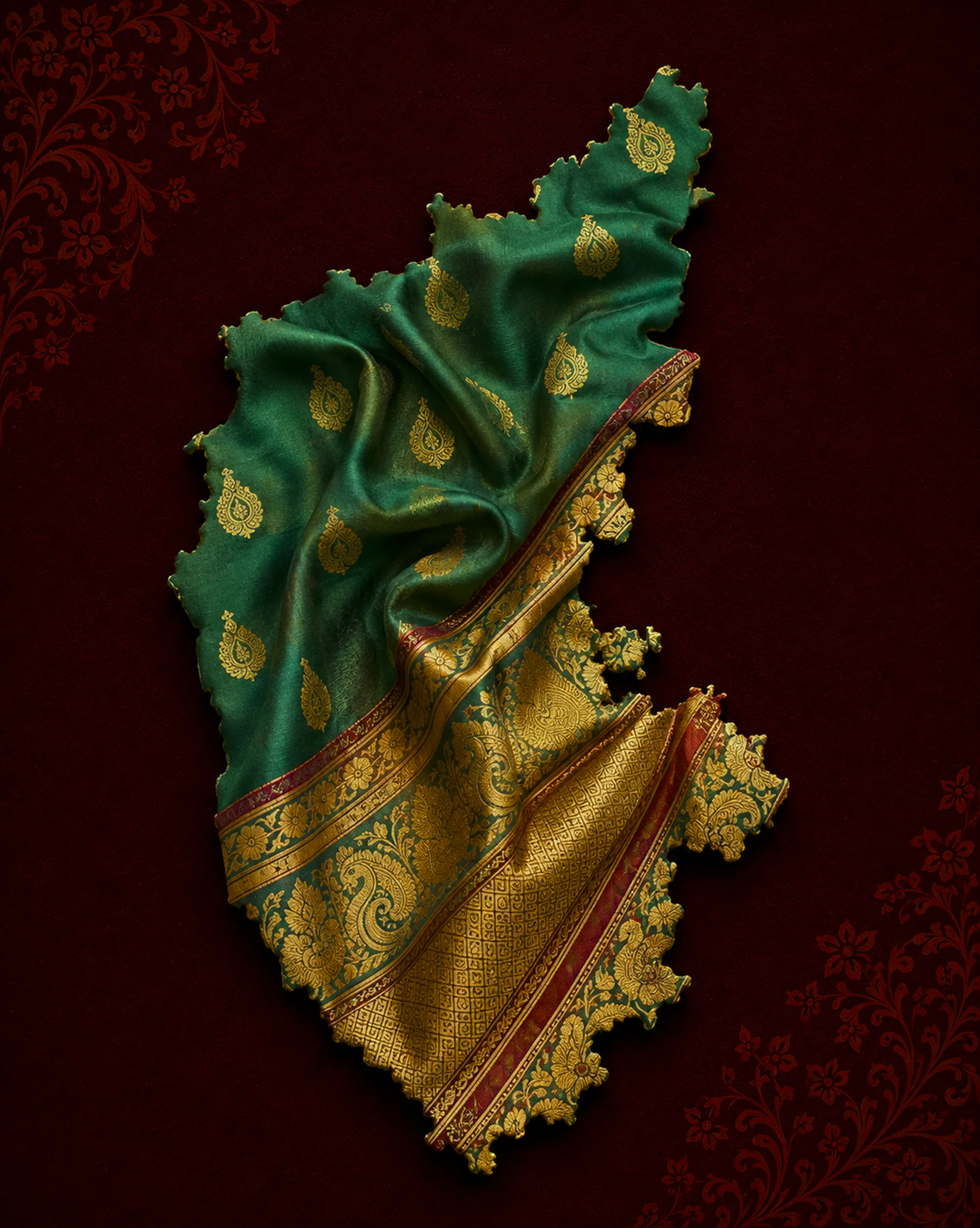
The Palace Silk
“The Wodeyars bought the looms; the world bought the silk.”
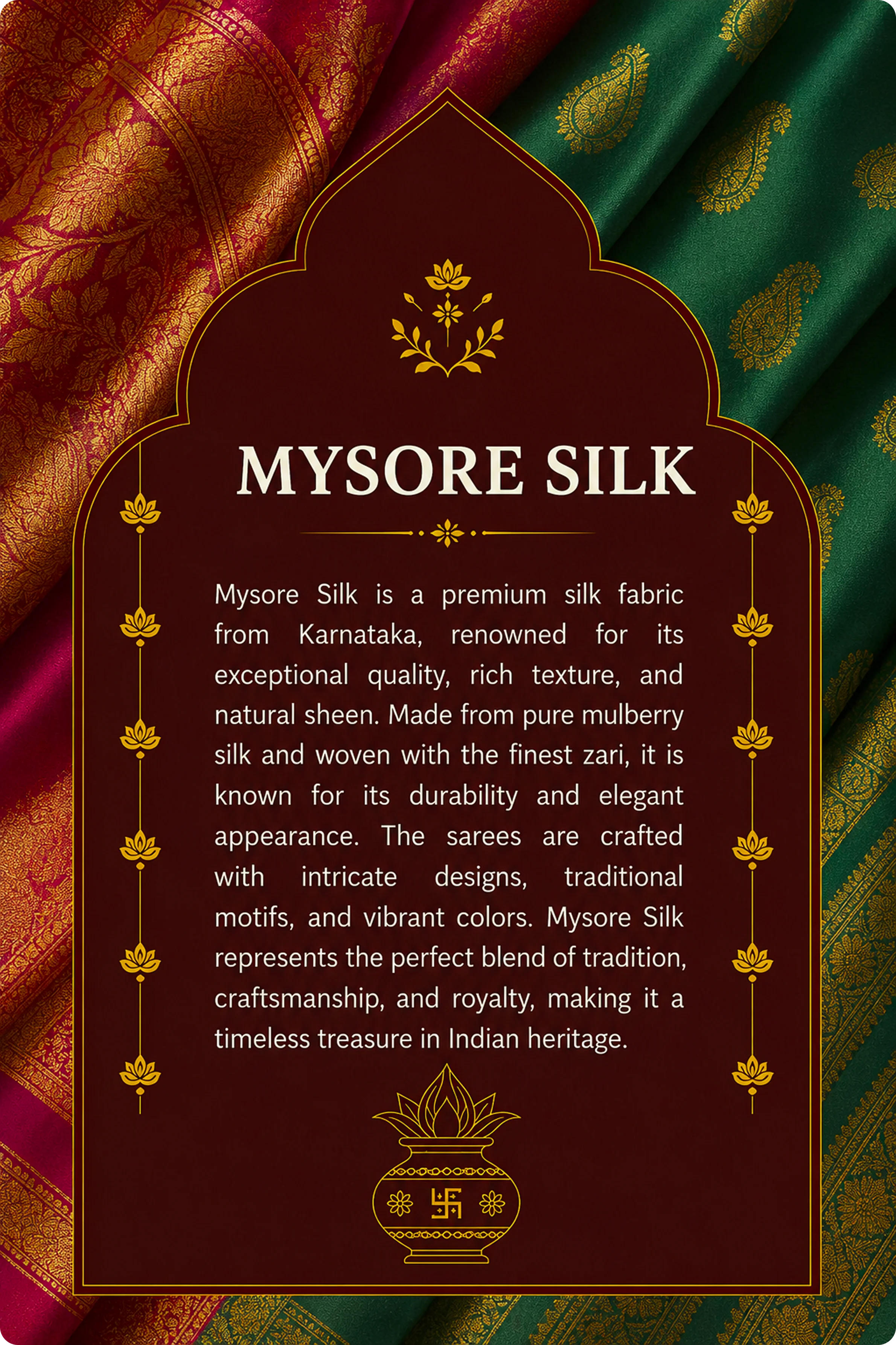
Under the patronage of the Wodeyar maharajas, Mysore became a silk capital in the early 20th century—a royal monopoly grown in palace mulberry gardens and woven for the court.
Mysore crepe silk is prized for its fine texture, luminous colour and honest price, making it the accessible luxury of South Indian wardrobes.



A Timeline of the Weave
Royal Silk Farm
The Wodeyars establish the state silk farm at Mysore.
Mysore Silk Factory
The royal factory begins weaving crepe silk for the court.
KSSRDI
The Karnataka silk research institute perfects the breed.
Celebrated Classic
Mysore silk drapes festivals, offices and weddings.
How the Weave Evolved
Under the patronage of the Wodeyar maharajas, Mysore became a silk capital in the early 20th century—a royal monopoly grown in palace mulberry gardens and woven for the court.
Mysore crepe silk is prized for its fine texture, luminous colour and honest price, making it the accessible luxury of South Indian wardrobes.
Interesting Facts
Mysore silk is grown from a breed perfected at a state institute.
It is the official silk of Karnataka’s ceremonies.
Crepe silk has a naturally wrinkle-resistant character.
The royal factory at Mysore is still a working landmark.
In the Loom's Light