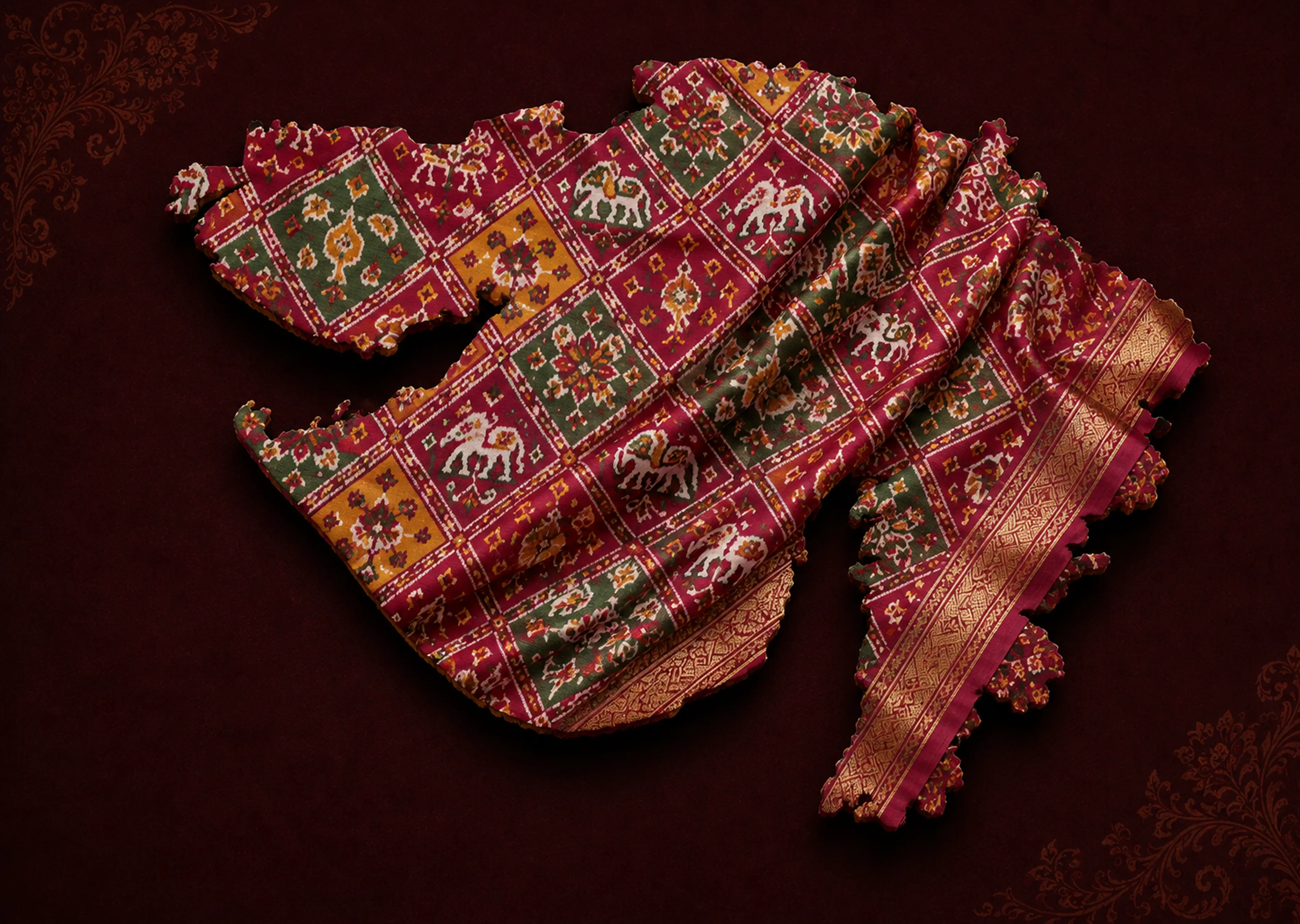
The Cloth That Costs a Fortnight
“To own a Patola is to own patience.”
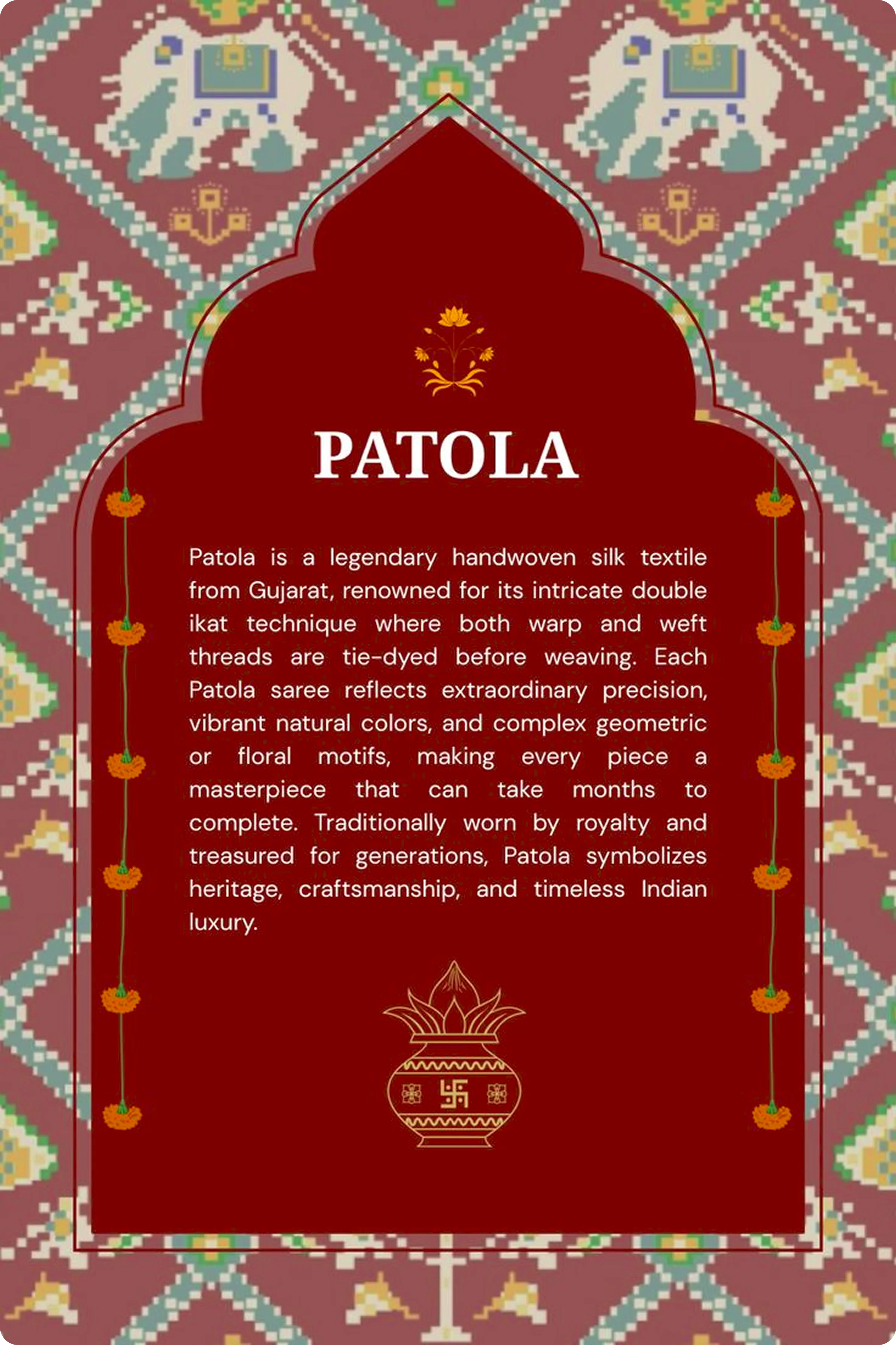
Brought to Patan by Jain weavers from the Deccan around the 12th century, the Patola is India’s rarest weave: a double ikat in which both warp and weft are tie-dyed before a single thread is crossed. The result is a pattern that appears printed, yet is born entirely from bound yarn.
Only the Salvi family of Patan carries the craft today—a monopoly of skill that has made the Patola a symbol of wealth, worship and enduring love.
A Timeline of the Weave
Arrival in Patan
Jain weavers bring double ikat to the court of Patan.
Wedding Cloth
Patolas become the treasured gift of Gujarati bridal trousseaus.
The Salvi Guardians
By the 20th century, the Salvi family alone keeps the craft alive.
Collector’s Cloth
A single Patola is now priced by the month of labour that made it.
How the Weave Evolved
Brought to Patan by Jain weavers from the Deccan around the 12th century, the Patola is India’s rarest weave: a double ikat in which both warp and weft are tie-dyed before a single thread is crossed. The result is a pattern that appears printed, yet is born entirely from bound yarn.
Only the Salvi family of Patan carries the craft today—a monopoly of skill that has made the Patola a symbol of wealth, worship and enduring love.
Interesting Facts
A Patola can take 4 to 6 months to tie, dye and weave—and some have taken a year.
Only the Salvi family in Patan still weave true Patola.
The cloth was historically reserved for royalty and bride-gifts.
A genuine Patola reads identically on both sides—the mark of perfect ikat.
In the Loom's Light