Andhra Pradesh
KALAMKARI & UPPADA — THE SIGNATURE WEAVE
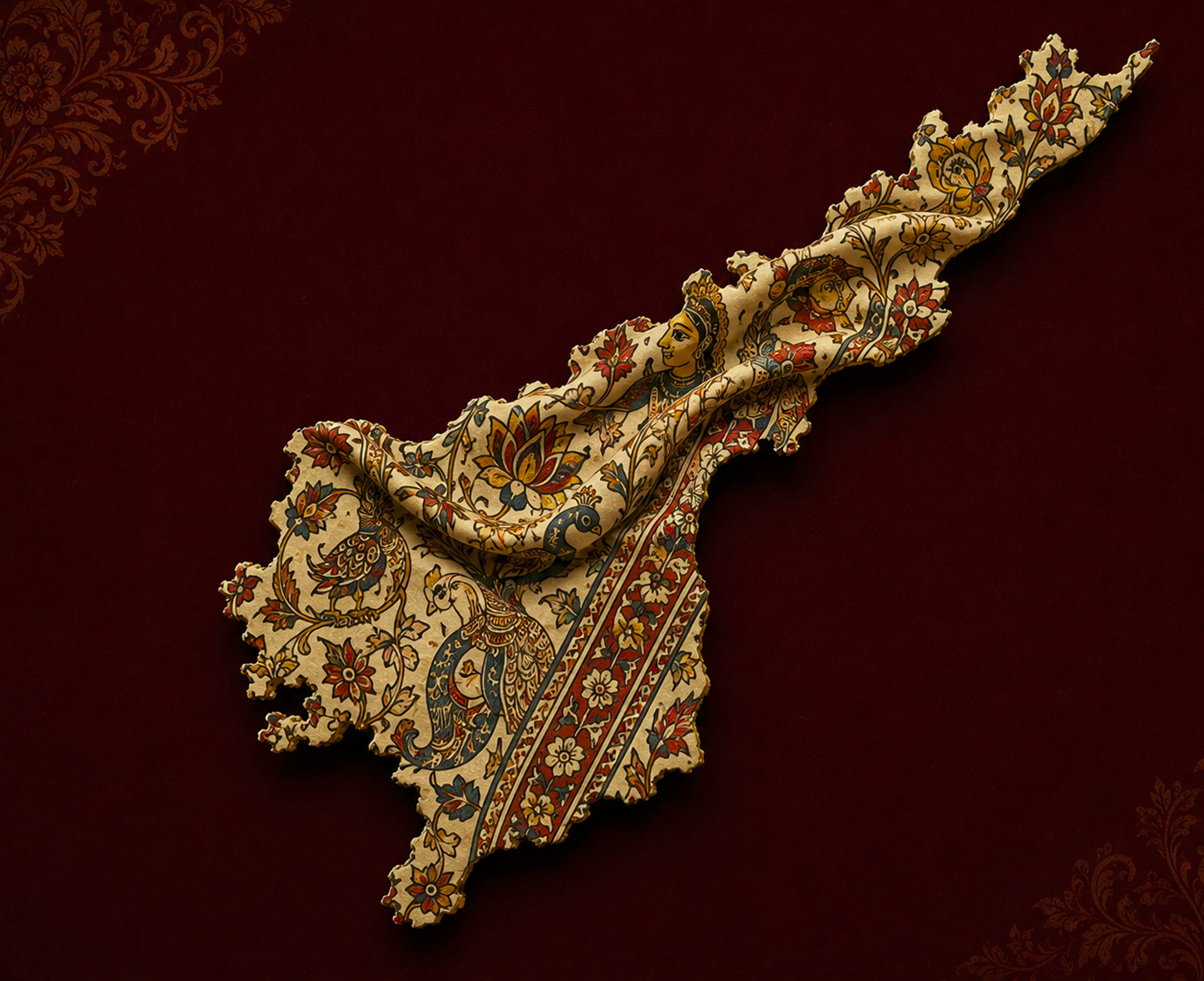
Cloth Painted Like a Temple
“The kalam does not colour the cloth; it prays on it.”
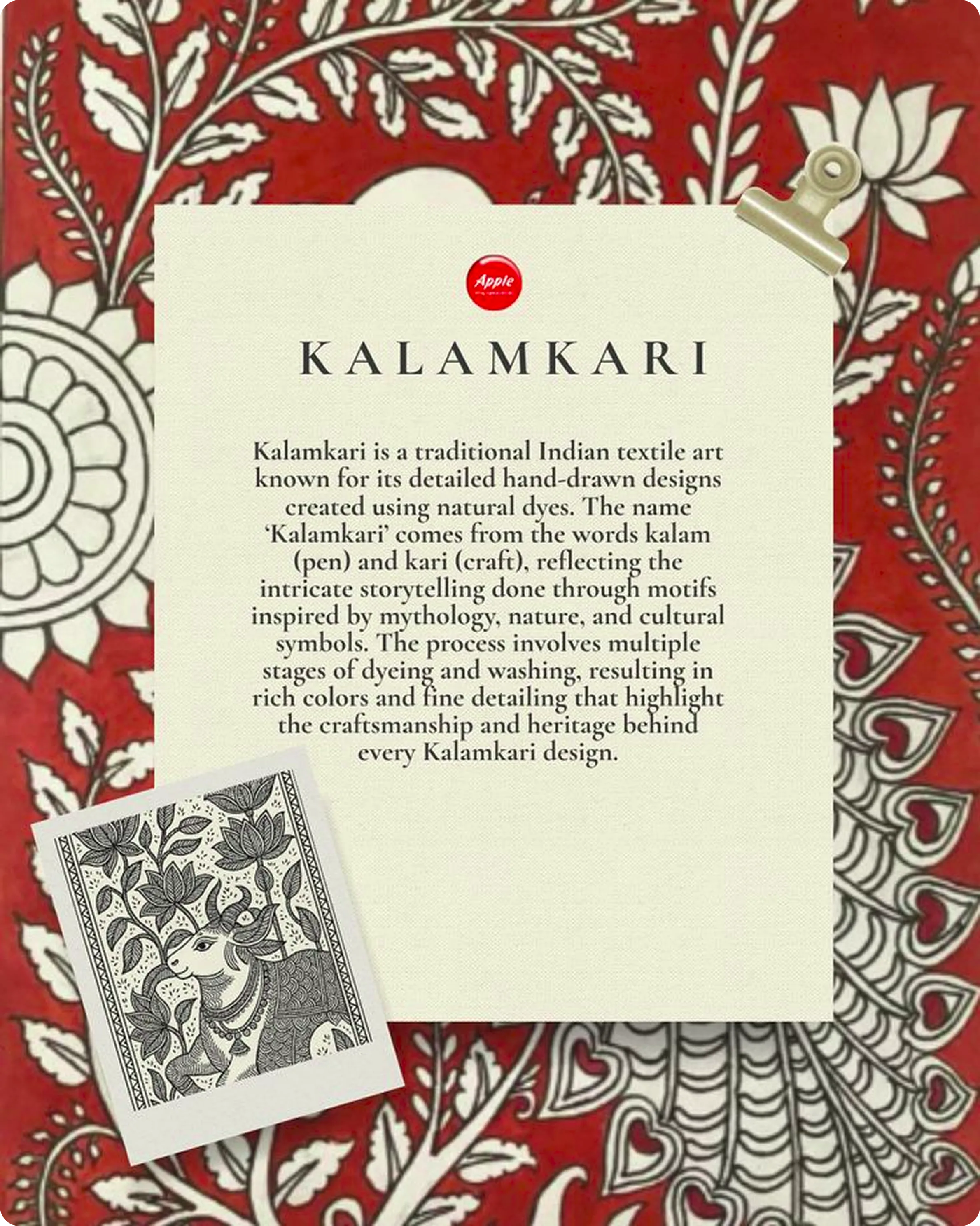
Two traditions share the name: Srikalahasti, where kalam (pen) artists paint epics directly on cloth with natural dyes, and Machilipatnam, where carved blocks print the fabric. Both were born of temple need—banners for festivals, hangings for deities.
The craft’s twenty-three steps, from cow-dung bleaching to jaggery-and-iron black dye, have changed little in seven centuries.
A Timeline of the Weave
Temple Banners
Srikalahasti artists paint the first kalamkari for temple festivals.
Trade Cloth
Machilipatnam block-printed cloth reaches Persia and Europe as chintz.
Revival by Hand
Post-independence, the painted form is revived as an art textile.
Wearable Fresco
Kalamkari now drapes sarees and homes alike.
How the Weave Evolved
Two traditions share the name: Srikalahasti, where kalam (pen) artists paint epics directly on cloth with natural dyes, and Machilipatnam, where carved blocks print the fabric. Both were born of temple need—banners for festivals, hangings for deities.
The craft’s twenty-three steps, from cow-dung bleaching to jaggery-and-iron black dye, have changed little in seven centuries.
Interesting Facts
True kalamkari takes 23 separate hand-steps.
No synthetic dye is permitted in the traditional process.
The same madder vat yields red, pink and maroon depending on mordant strength.
Srikalahasti is the only place where kalamkari is still painted, not printed.
In the Loom's Light